

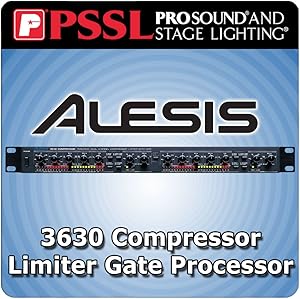
Alesis
Alesis 3630 Compressor Dual Channel Dynamics Processor
★★★★★
The Alesis 3630 delivers versatile dual-channel compression with gating and sidechain at a price that fits any studio budget.
Check availability
Affiliate Disclosure: Studio Supplies may earn a commission from qualifying purchases made through links on this page, at no additional cost to you. This helps support our editorial team.
Notice a mistake? Let Us Know
Overview
Specifications
Brand
Alesis
Model
3630
Channels
Dual-Channel
Controls
Ratio, Threshold, Attack, Decay
Compression Styles
RMS and Peak
Dynamic Curves
Hard Knee and Soft Knee
Gates
Two independent gates with Threshold and Rate controls
Features
Sidechain Input, Stereo Linkable Operation, Signal Metering
Pros & Cons
👍 Pros
- Dual-channel design with stereo link handles both individual tracks and stereo buses
- Includes both RMS and Peak detection modes for flexible compression character
- Independent noise gates on each channel add signal cleanup without extra gear
- Sidechain input enables advanced techniques like ducking and frequency-dependent compression
👎 Cons
- Build quality and components reflect the budget price point
- Can introduce audible noise at extreme settings compared to higher-end compressors
- Metering is basic and may not provide the precision feedback some engineers prefer
- Limited headroom compared to professional rack compressors in the same category
Frequently Asked Questions
Can the two channels be linked for stereo processing?
Yes, the Alesis 3630 features a stereo link mode that locks both channels together for consistent stereo bus compression.
What compression styles does the 3630 offer?
It provides both RMS and Peak detection modes, allowing you to choose between smooth, averaged response and fast transient-catching behavior.
Does the 3630 include a noise gate?
Yes, it has two independent gates — one per channel — each with dedicated threshold and rate controls for cleaning up signals before or after compression.
What is the sidechain input used for?
The sidechain input lets you trigger compression based on an external signal, which is useful for techniques like ducking a music bed under a vocal or de-essing.
What is the difference between hard knee and soft knee on this unit?
Hard knee applies compression abruptly once the signal crosses the threshold, producing a more noticeable effect, while soft knee gradually increases the ratio around the threshold for a smoother, more transparent sound.
Related Products


