



Alesis
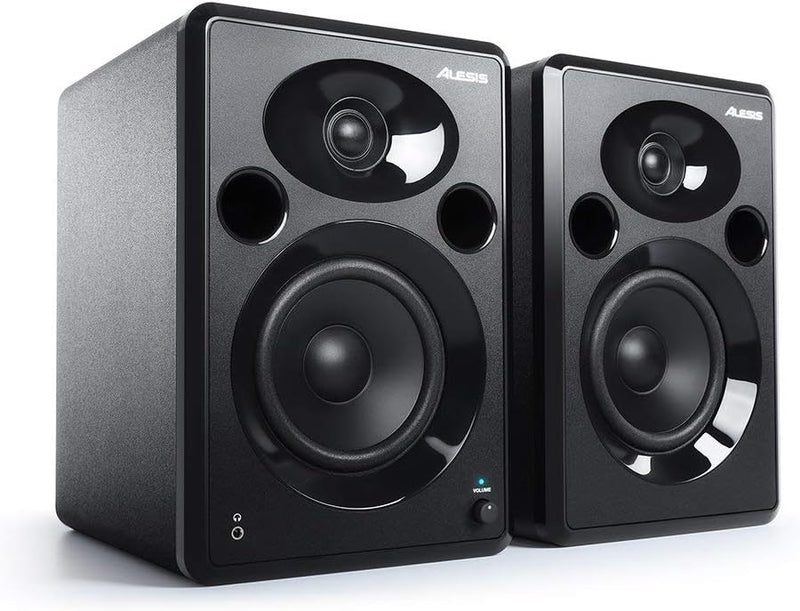
Alesis ELEVATE 5 MKII-cr 5" Powered Studio Monitor Speakers
★★★★★
80W
Accurate near-field monitoring with a silk dome tweeter and ported low-end — the Elevate 5 MKII brings honest, flat-leaning reproduction to small studio spaces.
$78.00*$109.00Save 28%
View on Amazon
✓ In Stock on Amazon.com
*Price sourced from Amazon.com. Last updated:Jul 14, 2026.Price and availability are subject to change.
Affiliate Disclosure: Studio Supplies may earn a commission from qualifying purchases made through links on this page, at no additional cost to you. This helps support our editorial team.
Notice a mistake? Let Us Know
Overview
Key Features
Separate high-and low-frequency drivers with crossover;40 per channel output power - 80W total
5-inch low-frequency driver in ported enclosure delivers rich, tight bass; 1-inch silk dome tweeter provides smooth, clear highs
High-density wood cabinets suppress unwanted resonances; Carefully formed baffle radiuses reduce edge diffraction
Elliptical tweeter waveguide optimizes dispersion and stereo imaging
Dedicated subwoofer output for use with virtually any powered subwoofer
Specifications
Output Power
40W per channel (80W total)
Low-Frequency Driver
5-inch, ported enclosure
High-Frequency Driver
1-inch silk dome tweeter
Cabinet Material
High-density wood
Tweeter Waveguide
Elliptical
Subwoofer Output
Dedicated output (compatible with any powered subwoofer)
Configuration
Bi-amplified (active monitor)
Pros & Cons
👍 Pros
- The 1-inch silk dome tweeter delivers smooth high-frequency extension without harshness, making extended mixing sessions on acoustic guitars, vocals, and cymbals noticeably less fatiguing than budget monitors with hard-dome tweeters.
- High-density wood cabinets with careful baffle radiusing suppress cabinet resonances that color playback — what you hear is the signal, not the box.
- The elliptical tweeter waveguide widens the sweet spot and tightens stereo placement, which matters in small rooms where the ideal listening position can't always be perfectly centered.
- Dedicated subwoofer output makes the system expandable without replacing the monitors — you can add low-end reach later as needs and budget allow.
- Dual input options (balanced TRS and unbalanced RCA) cover both professional interface connections and consumer source integration without adapters.
👎 Cons
- At 5 inches, the low-frequency driver reaches its physical limits below 70–80 Hz — kick drum weight and sub-bass content require a subwoofer to translate accurately, which adds cost and desk space.
- 40W per channel is adequate for near-field use in small rooms but may not fill a medium-sized tracking room to the SPL levels needed for loud playback reference.
- The ported enclosure creates a bass resonance peak that requires careful room placement — pushed into a corner or tight against a wall, the low-end will bloom in ways that mislead mix decisions.
- No onboard EQ shelving controls (high or low trim) means you can't compensate for room-induced frequency problems at the monitor itself.
- At this price tier, the noise floor at high gain settings may be audible in silent passages when monitoring closely — not a dealbreaker for most sessions, but noticeable in quiet vocal booth tracking.
Frequently Asked Questions
Are these monitors flat enough for critical mixing decisions?
The Elevate 5 MKII is tuned toward honest reproduction rather than hyped consumer sound, making it suitable for mixing decisions on a budget. The ported enclosure adds low-end extension, so be aware of slight bass lift near the port — position them away from walls to minimize boundary reinforcement.
Do these require phantom power or any external amplification?
No — the Elevate 5 MKII is a powered (active) monitor with a built-in 40W-per-channel amplifier. Connect directly to your audio interface via balanced or unbalanced inputs; no separate amp is needed.
What input connections do these monitors accept?
The Elevate 5 MKII accepts both balanced TRS and unbalanced RCA inputs, giving compatibility with most audio interfaces, mixers, and consumer playback sources without adapters.
How does the elliptical tweeter waveguide affect stereo imaging?
The waveguide controls the dispersion pattern of the 1-inch silk dome tweeter, focusing the high-frequency output into the listening position. In practice this tightens the stereo image and widens the usable sweet spot compared to a bare tweeter — critical when your listening position isn't perfectly centered.
Can I add a subwoofer to these monitors?
Yes — there is a dedicated subwoofer output on each monitor, allowing you to expand the low-end below the 5-inch driver's reach with virtually any powered subwoofer. This makes the system scalable as your studio grows.
Related Products


