



Allen & Heath
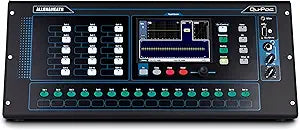
Allen & Heath QU-PAC-32 Ultra Compact Digital Mixer
XLR
The Allen & Heath Qu-Pac-32 puts 38-input AnaLOGIQ mixing, iPad control, and multitrack USB recording in a rack-ready box the size of a lunchbox.
$1,999.99*$2,499.99Save 20%
View on Amazon
✓ In Stock on Amazon.com
*Price sourced from Amazon.com. Last updated:Aug 28, 2026.Price and availability are subject to change — details.
Affiliate Disclosure: As an Amazon Associate, Studio Supplies earns from qualifying purchases made through links on this page, at no additional cost to you. This helps support our editorial team.
Notice a mistake? Let Us Know
Overview
Key Features
16 acclaimed AnaLOGIQ recallable preamps
16 on-board mic/line inputs (XLR/TRS)
Expandable up to 38 inputs via dSNAKE
Qu-Pad iPad App for all live mixing controls
Qu-Drive direct multi-track recording/playback on USB drives
Specifications
Local Mic/Line Inputs
16 (XLR/TRS combo)
Maximum Inputs (with dSNAKE)
38
Preamps
16 AnaLOGIQ recallable
Expansion Protocol
dSNAKE (Cat5)
Multitrack Recording
Qu-Drive (USB, up to 18 tracks)
Remote Control
Qu-Pad iPad App (Wi-Fi)
Form Factor
Desktop / Rack-mountable
Brand
Allen & Heath
Model
AH-QU-PAC-32
Frequently Asked Questions
How does the AnaLOGIQ preamp perform sonically compared to dedicated outboard preamps?
The AnaLOGIQ preamps are recallable and designed for low-noise, high-headroom performance within a live and install context. They deliver a clean, transparent response with enough gain for ribbons and dynamic mics without audible self-noise coloring the floor of a quiet acoustic. They won't add the harmonic character of a transformer-coupled Neve-style preamp, but in a live room or installed system where recall accuracy and consistent noise floors matter more than vintage coloration, they are a professional-grade front end.
What does expanding to 38 inputs via dSNAKE actually involve on a live show?
The Qu-Pac-32 connects to Allen & Heath AR Series stage boxes over a single Cat5 cable via the dSNAKE port. This extends the local 16 XLR/TRS inputs with up to 22 additional remote inputs from the stage — without running individual snake cables for each channel. The Cat5 carries mic-level audio, control data, and AES sends simultaneously, which simplifies stage-to-mix-position cabling significantly on corporate AV installs, touring club shows, and school auditorium rigs.
Can the Qu-Pac-32 record a multitrack session directly without a DAW or laptop?
Yes — Qu-Drive allows direct multitrack recording and playback to a USB hard drive or SSD connected to the front panel, without any computer in the chain. You can capture up to 18 tracks simultaneously and play back multitrack stems for virtual soundcheck. For engineers who want to record a rehearsal or live show without patching into a laptop running a DAW, this is the workflow.
Is the Qu-Pad iPad app a full-featured replacement for a physical surface, or is it a remote control supplement?
The Qu-Pad app gives access to all live mixing controls — channel faders, EQ, dynamics, aux sends, and scene recall — and is designed to be the primary mixing surface for the Qu-Pac, not a secondary remote. The unit's touchscreen handles quick access and metering, while Qu-Pad enables full control from anywhere in the room. The combination is intended for engineers who need to walk the room during a show and mix from position.
How does the Qu-Pac-32 handle gain staging when switching between saved scenes mid-show?
Preamp gain is recallable per scene, which means a gain change stored in one scene will apply when you recall it — a critical workflow consideration for engineers who use scenes for different acts or time-of-day configurations. Because the AnaLOGIQ preamps are digitally controlled, recall is precise and repeatable rather than approximate. The implication is that your gain structure should be intentionally planned per scene before the show, not adjusted on the fly after scene recall.
Related Products


