



Allen & Heath
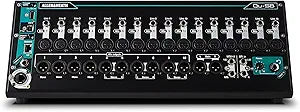
Allen & Heath QU-SB 18-In/14-Out Digital Mixer
XLR
The Allen & Heath QU-SB puts a full iLive-grade digital console in your rack and your iPad, built for bands and installs that demand recallable preamps without the footprint.
$999.99*$1,299.99Save 23%
View on Amazon
✓ In Stock on Amazon.com
*Price sourced from Amazon.com. Last updated:Aug 29, 2026.Price and availability are subject to change — details.
Affiliate Disclosure: As an Amazon Associate, Studio Supplies earns from qualifying purchases made through links on this page, at no additional cost to you. This helps support our editorial team.
Notice a mistake? Let Us Know
Overview
Key Features
Compact digital mixer designed for iPad control; 16 mono inputs (TRS + XLR), 1 stereo input (TRS), 12 on-board mix outputs (LR, mono mix 1-4, stereo mix 1-3), 1 stereo Matrix out (TRS)
Qu-32 core inside (32 mono + 3 stereo input channels)
Up to 11 monitor mixes (4 mono + 7 stereo), 4 FX engines, 4 FX sends/returns, 4 mute groups, 4 Dca groups
32 x 32 USB Audio Interface
Qu-drive direct multitrack recording/Playback on USB drives, recallable analogiq preamps, ilive FX library, dsnake remote audio port expansion up to 38 inputs
portable mixer, audio interface, ipad mixer, compact mixer, professional mixer, usb live mixer, monitor mixer, studio mixer
Specifications
Brand
Allen & Heath
Model
QU-SB
Input Channels (Mono)
16 (TRS + XLR)
Input Channels (Stereo)
1 (TRS)
On-board Mix Outputs
12 (LR, mono mix 1-4, stereo mix 1-3)
Stereo Matrix Outputs
1 (TRS)
Core Processing
Qu-32 core (32 mono + 3 stereo input channels)
Monitor Mixes
Up to 11 (4 mono + 7 stereo)
FX Engines
4
FX Sends/Returns
4
Mute Groups
4
DCA Groups
4
USB Audio Interface
32 x 32
Recording/Playback
Qu-drive direct multitrack on USB drives
Preamps
Recallable AnalogiQ
FX Library
iLive FX library
Remote Audio Port
DSNAKE (expansion up to 38 inputs)
Control Method
iPad control
Frequently Asked Questions
Does the QU-SB require a tablet to operate, or can it function standalone?
The QU-SB can run standalone once a scene is loaded — it will recall its last state on power-up. However, all real-time mixing, EQ adjustments, and routing changes require the QU-Pad app on an iPad. There is no physical fader surface on this unit. Plan your show file in advance if Wi-Fi reliability is a concern.
How many monitor mixes can I run simultaneously, and what's the output routing like?
The QU-SB supports up to 11 discrete monitor mixes — 4 mono and 7 stereo — all accessible from the 12 on-board physical outputs (LR, mono mixes 1–4, stereo mixes 1–3, and a stereo matrix out). For larger stages, expansion via dSNAKE to an Allen & Heath AR rack extends your input count to 38 without adding analog snake runs.
What are the AnalogIQ preamps like in terms of gain and noise floor?
The recallable AnalogIQ preamps are the same architecture used across Allen & Heath's professional touring line — they deliver clean, low-noise gain across the range with enough headroom to handle loud transients from drums or brass without clipping. The recallability means your gain staging is consistent from soundcheck to show, night after night.
Can I use the QU-SB as a 32x32 USB audio interface for DAW tracking?
Yes. The QU-SB operates as a class-compliant 32x32 USB audio interface at up to 48kHz. Combined with Qu-Drive multitrack recording directly to USB storage, you can record a full show to a thumb drive or hard drive without involving a laptop at all — a significant workflow advantage for live capture.
Is the QU-You personal monitoring app compatible, and how does it work alongside QU-Pad?
QU-You runs alongside QU-Pad on the same Wi-Fi network, allowing individual performers to control their own monitor mix from a phone or tablet. The FOH engineer retains master control via QU-Pad while musicians adjust their personal sends independently — reducing talkback interruptions during a live set.
Related Products


