



Allen & Heath
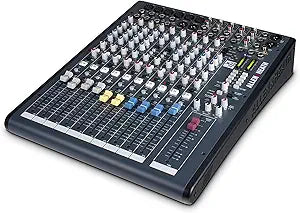
Allen & Heath AH-XB2-14 Compact Radio Broadcast Mixer
The Allen & Heath XB2-14 brings broadcast-grade DuoPre preamps, Telco integration, and a built-in USB soundcard to compact radio and internet studio setups.
$1,999.99*
Check availability
*Price sourced from Amazon.com. Last updated:Aug 28, 2026.Price and availability are subject to change — details.
Affiliate Disclosure: As an Amazon Associate, Studio Supplies earns from qualifying purchases made through links on this page, at no additional cost to you. This helps support our editorial team.
Notice a mistake? Let Us Know
Overview
Key Features
Compact broadcast mixer with 4 mic/line channels, 4 Dual Source stereo channels and 2 Telco channels
Two-stage DuoPre Preamps to carefully control gain
Includes full duplex USB soundcard built-in
Dedicated stereo audition bus
100mm faders
Specifications
Product Type
Compact Radio Broadcast Mixer
Brand
Allen & Heath
Mic/Line Channels
4
Dual Source Stereo Channels
4
Telco Channels
2
Preamps
Two-stage DuoPre
Soundcard
Full Duplex USB
Fader Length
100mm
Special Features
Dedicated Stereo Audition Bus
Frequently Asked Questions
What makes the DuoPre preamps particularly suited to broadcast mic work?
The two-stage DuoPre design separates the initial gain stage from the trim control, giving you finer resolution over gain structure across the range. The practical result is a low noise floor even at the high gain settings that dynamic broadcast mics typically demand — you hear clean, quiet mic signal on air rather than the hiss that single-stage designs introduce when pushed.
What are the Telco channels and why are they essential for radio production?
Telco channels are dedicated inputs for telephone hybrid connections — they feed caller audio into the mix with independent level and routing control. For any broadcast format that takes live calls, this is fundamental infrastructure. The XB2-14's two Telco channels cover a standard two-line call setup without requiring outboard routing.
Does the built-in USB soundcard replace the need for an external audio interface?
Yes, for most broadcast desktop setups. The full duplex USB soundcard handles simultaneous record and playback, connecting directly to your broadcast PC or Mac for playout integration and recording. This keeps the signal path short and eliminates one box from the desk.
What role does the dedicated stereo audition bus play in a live broadcast workflow?
The audition bus lets you pre-listen to any source — music bed, drop, caller audio — before it goes to air, without disturbing the main program mix. It's an essential broadcast workflow tool: you monitor the incoming element in your headphones while the program output remains unaffected.
How does the Logic I/O integrate the XB2-14 with broadcast automation systems?
The 27 logic inputs and outputs allow the desk to communicate directly with automation software, on-air indicator lights, cough switches, and remote fader-start triggers. This is the connectivity layer that makes the XB2-14 compatible with professional broadcast control environments without additional interfacing hardware between the desk and the automation system.
Related Products


