



Allen & Heath
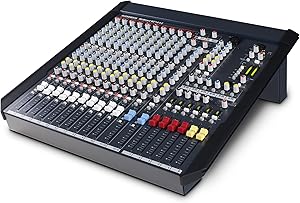
Allen & Heath AMS-WZ4144 MixWizard4 14:4:2 Console
XLR
The MixWizard4 14:4:2 delivers Allen & Heath's legendarily clean preamps and surgical EQ in a 19-inch rack-ready console built for demanding live and studio environments.
$2,199.99*
View on Amazon
✓ In Stock on Amazon.com
*Price sourced from Amazon.com. Last updated:Aug 28, 2026.Price and availability are subject to change — details.
Affiliate Disclosure: As an Amazon Associate, Studio Supplies earns from qualifying purchases made through links on this page, at no additional cost to you. This helps support our editorial team.
Notice a mistake? Let Us Know
Overview
Key Features
19-inch rack mountable professional mixing console
10 mic/line inputs with XLR/TRS jacks
2 dual stereo inputs
100mm faders
4-band EQ with 2 swept mids
Specifications
Format
14:4:2 (14 inputs, 4 subgroups, 2-bus master)
Mic/Line Inputs
10 (XLR/TRS combo jacks)
Stereo Inputs
2 dual stereo inputs
Faders
100mm
EQ
4-band with 2 swept mid bands
Rack Format
19-inch rack mountable
Frequently Asked Questions
How do the mic preamps on the MixWizard4 handle high-gain sources like dynamic mics on quiet vocals?
Allen & Heath's preamp design maintains a low noise floor even when you're pushing gain for high-impedance dynamics. You'll hear a clean, open top end rather than the grainy, compressed sound that cheaper preamps exhibit when cranked — important for spoken word, acoustic instruments, or any source that needs the gain staged aggressively.
What does the 4-band EQ with swept mids actually give you that a fixed-mid console doesn't?
The two swept mid bands let you dial in the exact frequency causing a problem — a nasal honk in a vocal, boxiness in an acoustic guitar — rather than boosting or cutting a preset point that may not be where the issue lives. In live work especially, this is the difference between a surgical fix and an educated guess.
Can the MixWizard4 be used as a recording console feeding a DAW?
Yes. The console's direct outputs and subgroup routing make it straightforward to feed individual channels or stems to an audio interface. It's used regularly as a front-end in small studio tracking sessions where its preamp character and physical fader control are preferable to working entirely in the box.
How does the 14:4:2 format translate to routing flexibility on a live gig?
The four subgroups let you bus drums, backline, vocals, and keys independently before hitting the master bus — giving you one fader to ride an entire section rather than chasing individual channels mid-show. The two-bus master output handles FOH cleanly.
Is the console rack-mountable for installed or touring rigs?
Yes — the MixWizard4 is 19-inch rack mountable, which makes it suitable for installed AV environments, broadcast racks, and touring fly rigs where it sits alongside outboard gear.
Related Products


