

Behringer
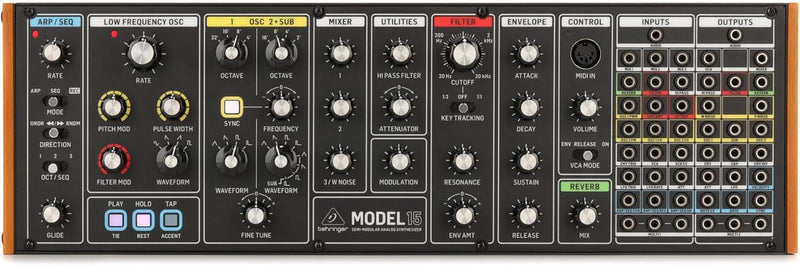
Behringer 0718-AAW86-AR1 Model 15 Analog Synthesizer
Explore Classic Analog Synthesis The Behringer Model 15 Semi-modular Analog Synthesizer brings the iconic sounds of classic analog synthesis to the modern musician. With meticulously recreated circuitry and a semi-modular architecture, this synthesizer offers a pure analog signal path that captu...
$319.00*
View on Amazon
✓ In Stock on Amazon.com
*Price sourced from Amazon.com. Last updated:Oct 22, 2026.Price and availability are subject to change — details.
Affiliate Disclosure: As an Amazon Associate, Studio Supplies earns from qualifying purchases made through links on this page, at no additional cost to you. This helps support our editorial team.
Notice a mistake? Let Us Know
Overview
Explore Classic Analog Synthesis
The Behringer Model 15 Semi-modular Analog Synthesizer brings the iconic sounds of classic analog synthesis to the modern musician. With meticulously recreated circuitry and a semi-modular architecture, this synthesizer offers a pure analog signal path that captures the character of its predecessor, while providing enhanced flexibility and connectivity.
Specifications:- Type: Semi-modular Analog Synthesizer
- Oscillators: 2 VCOs
- Patch Points: 48
- Sequencer: Step-sequencer
- Output: Headphone Out
- Features: Arpeggiator
Key Features
Semi-modular Analog Synthesizer with 2 VCOs
48 Patch Points
Step-sequencer
Headphone Out
Arpeggiat
Specifications
Type
Semi-modular Analog Synthesizer
VCOs
2
Patch Points
48
Features
Step-sequencer, Headphone Out, Arpeggiator
Frequently Asked Questions
What type of synthesis does the Behringer Model 15 utilize?
The Behringer Model 15 is a semi-modular analog synthesizer, offering a classic approach to sound generation with flexible patching.
How many VCOs (Voltage Controlled Oscillators) are included?
This synthesizer is equipped with two VCOs, providing a foundation for creating diverse and powerful sounds.
Does the Model 15 feature patch points for custom signal routing?
Yes, it includes 48 patch points, allowing users to explore extensive sound design possibilities and modular configurations.
Is there a built-in sequencer or arpeggiator on the Behringer Model 15?
Yes, it features both a step-sequencer for rhythmic patterns and an arpeggiator for generating melodic sequences.
Can I monitor my sound directly from the synthesizer?
Yes, the Behringer Model 15 comes with a dedicated headphone out port for convenient personal monitoring.
Related Products


