



Behringer
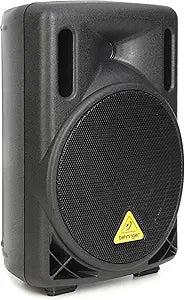
Behringer B208D Eurolive 200W 8-inch Powered Speaker
200W
The Behringer Eurolive B208D delivers 200 watts of Class-D punch in a compact cabinet that earns its place in small-venue PA rigs and monitor setups.
$229.00*
View on Amazon
✓ In Stock on Amazon.com
*Price sourced from Amazon.com. Last updated:Oct 21, 2026.Price and availability are subject to change — details.
Affiliate Disclosure: As an Amazon Associate, Studio Supplies earns from qualifying purchases made through links on this page, at no additional cost to you. This helps support our editorial team.
Notice a mistake? Let Us Know
Overview
Key Features
Integrated Pole Mount (each)
Built-in HF LF Protection
Revolutionary Class-D amplifier technology: enormous power, incredible sonic performance and super-light weight
Integrated sound processor for ultimate system control and speaker protection
Specifications
Amplifier Type
Class-D
Amplifier Power
200 watts
Woofer Size
8 inches
Compression Driver
1.35 inches
Configuration
2-way powered PA speaker
Protection
Built-in HF/LF protection circuit
Onboard Processing
Integrated sound processor (DSP)
Mounting
Integrated pole mount
Frequently Asked Questions
Is the B208D better suited as a main PA speaker or a stage monitor?
It performs both roles, but it shines most in small-venue PA applications — coffee shops, rehearsal rooms, small conference spaces. The integrated pole mount makes it straightforward to use as a main speaker on a stand. As a floor monitor it works, though the high-frequency dispersion from the 1.35-inch compression driver is optimized for front-of-house projection rather than a monitor wedge angle.
How does Class-D amplification affect the B208D's weight and heat output in a long gig?
Class-D is the practical advantage here. The amplifier runs significantly cooler and lighter than an equivalent Class-A/B design, which translates directly to less cabinet weight to lug and no thermal throttling during extended sets. The B208D runs cool across a full night of use.
Does the built-in HF/LF protection circuit actually prevent damage at high volumes, or is it a last-resort limiter?
The protection circuit is active and transparent — it manages the tweeter and woofer independently to prevent thermal and excursion damage before you hear distortion or clipping artifacts. It's not a surgical limiter; it's a guardrail that lets you push the cabinet harder with less worry.
What's the self-noise like on the B208D at moderate gain levels?
For its price tier, background hiss is acceptable for most live sound applications where ambient noise masks the floor. In quiet acoustic settings or when used close to an audience for speech reinforcement, the noise floor is more noticeable — particularly at high gain with a sensitive microphone input.
How does the integrated sound processor affect the B208D's tone?
The onboard processor applies EQ and limiting curves tuned for the specific driver and cabinet combination. It protects the speaker and shapes the frequency response to be more balanced than the raw driver would produce — but it also means you have less room to radically re-EQ the speaker from an external console without fighting the cabinet's own processing.
Related Products


