



Behringer
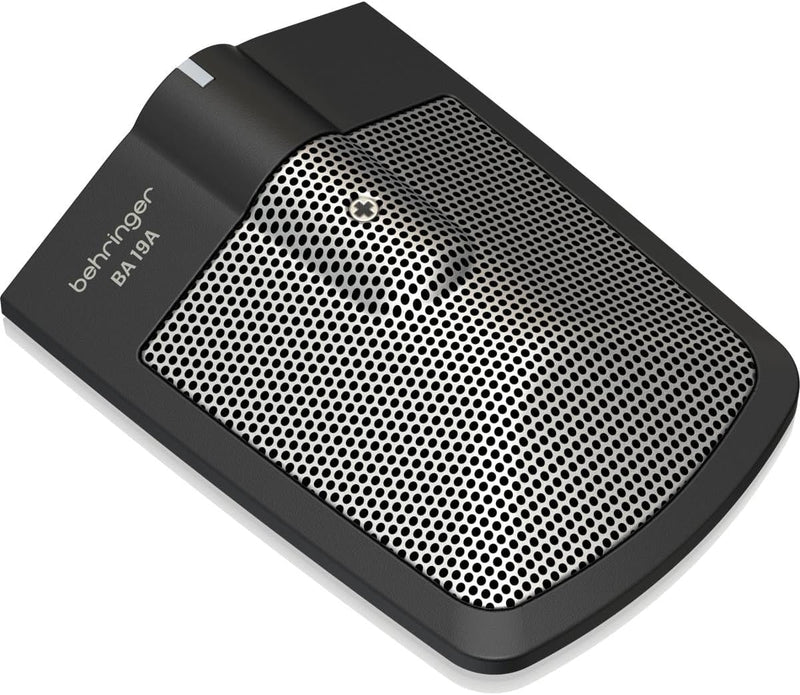
Behringer BA 19A Half-Cardioid Instrument Microphone
Condenser
The Behringer BA 19A boundary condenser mic captures kick drums, pianos, and bass instruments with clarity and minimal background noise.
View price on Amazon
Affiliate Disclosure: As an Amazon Associate, Studio Supplies earns from qualifying purchases made through links on this page, at no additional cost to you. This helps support our editorial team.
Notice a mistake? Let Us Know
Overview
Key Features
Condenser boundary microphone for acoustic instruments
Frequency response for kick drums, piano and bass-heavy instruments
Integrated preamplifier for outstanding signal integrity
Half-cardioid polar pattern minimizes background noise and feedback
Switchable filters for stronger lows and high-frequency attack
Specifications
Brand
Behringer
Model
BA 19A
Microphone Type
Condenser Boundary
Polar Pattern
Half-Cardioid
Frequency Response
Optimized for kick drums, piano, and bass-heavy instruments
Preamplifier
Integrated
Filters
Switchable (low-frequency boost / high-frequency attack)
Connector
XLR
Frequently Asked Questions
What type of microphone is the Behringer BA 19A?
It is a condenser boundary microphone with a half-cardioid polar pattern, designed to be placed on a flat surface near the sound source rather than mounted on a stand.
What instruments is the BA 19A best suited for?
It is optimized for bass-heavy acoustic instruments including kick drums, pianos, cajons, and upright basses, with a frequency response tailored for low-end capture.
Does the BA 19A require phantom power?
Yes, as a condenser microphone with an integrated preamplifier, it requires phantom power supplied through its XLR connection from a mixer or audio interface.
What do the switchable filters on the BA 19A do?
The filters let you shape the sound by boosting low-frequency response for fuller bass or emphasizing high-frequency attack for more percussive definition, depending on the instrument and application.
How does the half-cardioid polar pattern benefit the BA 19A?
The half-cardioid pattern picks up sound from above the mic's surface while rejecting sound from below and behind, which reduces stage noise, room reflections, and feedback when placed on floors or inside kick drums.
Related Products


