



Behringer
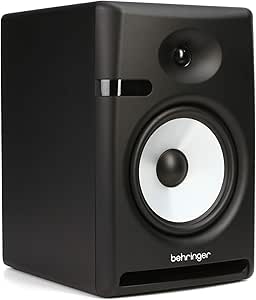
Behringer NEKKST K8 8" Powered Studio Monitor
150W
The Behringer NEKKST K8 delivers 150W bi-amplified monitoring with an 8-inch woofer — built for tracking and mixing where low-end accuracy matters.
$249.00*
View on Amazon
✓ In Stock on Amazon.com
*Price sourced from Amazon.com. Last updated:Sep 05, 2026.Price and availability are subject to change — details.
Affiliate Disclosure: As an Amazon Associate, Studio Supplies earns from qualifying purchases made through links on this page, at no additional cost to you. This helps support our editorial team.
Notice a mistake? Let Us Know
Overview
Key Features
2-way Powered Studio Monitor with 150W Bi-amplification
1" Silk Dome HF Driver (each)
8" LF Driver
Specifications
Type
2-way Powered Studio Monitor
Amplification
150W Bi-amplified
HF Driver
1" Silk Dome
LF Driver
8"
Frequently Asked Questions
How does true bi-amplification affect the K8's performance in a studio monitoring context?
True bi-amplification means the high-frequency and low-frequency drivers each have a dedicated amplifier channel, rather than sharing a single amp with a passive crossover between them. The result is tighter transient control on the 8-inch woofer and cleaner high-frequency reproduction from the silk dome tweeter — you hear less intermodulation between the two frequency ranges, which improves imaging and mix translation.
Is the 1-inch silk dome tweeter well-suited for tracking sessions with extended listening hours?
Silk dome tweeters are generally considered more forgiving on the ears during extended sessions compared to hard-dome designs. The K8's silk dome delivers a smoother top end that reduces listening fatigue, which is relevant for long tracking days or mix sessions where critical listening accuracy needs to hold up over time.
What inputs does the NEKKST K8 accept, and how does it integrate into a home or project studio signal chain?
Based on the K8's design as a powered studio monitor, it accepts balanced line-level signals typical of audio interface outputs. It connects directly to the monitor outputs of standard audio interfaces — no additional outboard gear required. Check your interface's output level (typically +4 dBu balanced) to ensure optimal gain staging into the monitor.
How does the 8-inch woofer affect the low-frequency response for mixing decisions?
An 8-inch driver offers meaningfully more low-frequency extension and air movement than a 5- or 6-inch monitor, allowing you to hear sub-bass elements more accurately. For electronic music, hip-hop, or any bass-forward genre, the K8's larger woofer gives you more reliable information about what's happening below 100 Hz — reducing the guesswork when making kick and bass decisions.
Is the NEKKST K8 suitable for use as a nearfield monitor in a small to medium-sized control room?
The K8 is designed as a nearfield monitor suitable for small to medium-sized rooms. The 8-inch woofer produces enough SPL for comfortable working levels at nearfield distances (1–1.5 meters), and the waveguide technology is intended to widen the sweet spot so the stereo image remains stable over a reasonable listening area.
Related Products


