



Behringer
Behringer QX602MP3 Premium 6-Input Mixer MP3
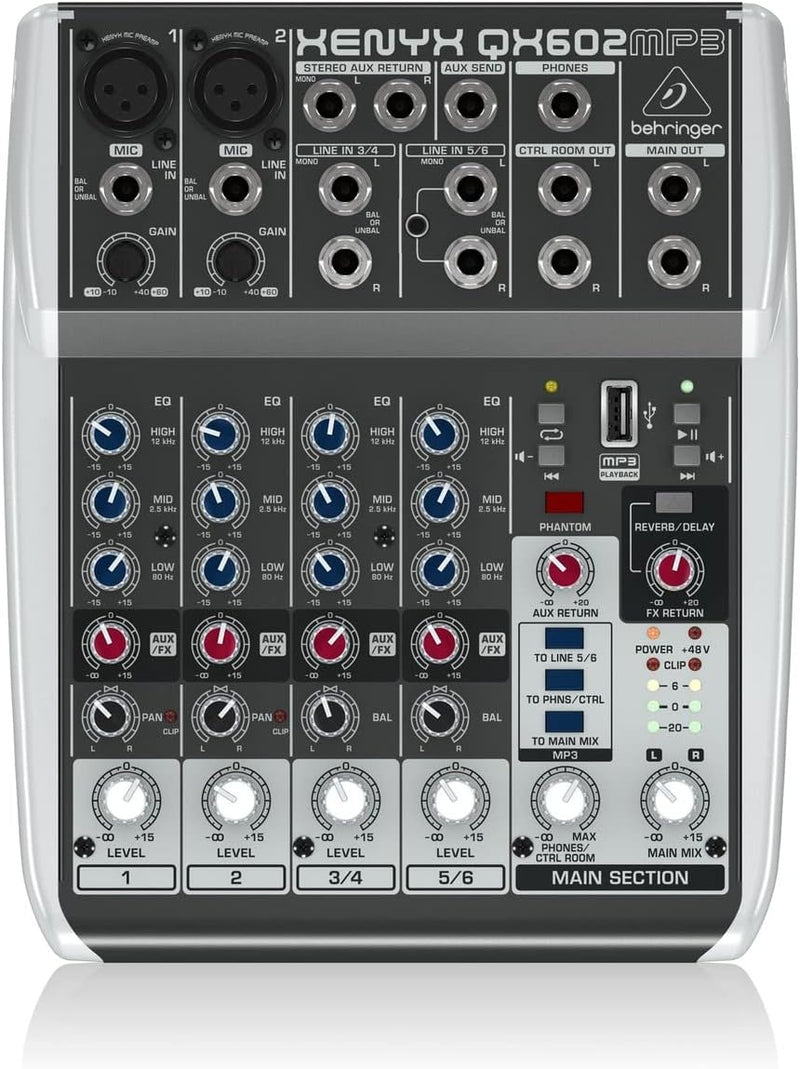
XENYX preamps, British EQ, and a built-in MP3 player in a sub-compact 6-input mixer that punches above its footprint for podcasting, streaming, and small live rigs.
$139.00*
View on Amazon
✓ In Stock on Amazon.com
*Price sourced from Amazon.com. Last updated:Oct 23, 2026.Price and availability are subject to change — details.
Affiliate Disclosure: As an Amazon Associate, Studio Supplies earns from qualifying purchases made through links on this page, at no additional cost to you. This helps support our editorial team.
Notice a mistake? Let Us Know
Overview
Key Features
Premium ultra-low noise, high headroom 6-input analog mixer
2 state-of-the-art XENYX Mic Preamps comparable to stand-alone boutique preamps
2 balanced, high-headroom stereo line inputs
Neo-classic "British" 3-band EQs for warm and musical sound
High-performance MP3 player included to play audio files via USB stick
Specifications
Total Inputs
6
Mic Preamps
2 XENYX
EQ
Neo-classic 3-band "British" EQ
Stereo Line Inputs
2 Balanced High-Headroom
MP3 Player
Integrated, USB stick playback
Connectivity
Auxiliary
Power Source
Corded Electric
Dimensions
9.06 x 7.68 x 2.95 inches
Brand
Behringer
Model
QX602MP3
Frequently Asked Questions
How do the XENYX mic preamps in the QX602MP3 perform at high gain settings?
The XENYX preamp design targets low noise at moderate-to-high gain, and at typical voice-over or instrument gain levels the noise floor stays acceptably low for podcast and broadcast applications. At maximum gain with a low-output dynamic microphone, you may hear residual self-noise — a higher-output condenser will give you better headroom and a cleaner floor.
Does the QX602MP3 supply phantom power for condenser microphones?
The product listing does not explicitly confirm phantom power availability. Verify this specification before pairing the QX602MP3 with condenser microphones that require 48V phantom power — this is a critical gain-staging consideration for studio and broadcast setups.
What does the "British" 3-band EQ actually do to the signal character?
The "neo-classic British EQ" label references the midrange-forward, musical response curves associated with classic UK console designs. In practice, the EQ bands are intended to add warmth and presence rather than surgical correction — boosting the high shelf adds air without harshness, and the mid band has a musical quality that makes vocals sit more naturally in a mix.
How does the MP3 player work, and what file formats does it support?
The integrated MP3 player reads audio files from a USB stick, allowing you to play backing tracks, intros, or music directly through the mixer without a separate media player in the signal chain. The feature targets live performers and presenters who want a simplified stage setup.
Can the QX602MP3 be used as a USB audio interface with a DAW?
The product listing specifies auxiliary connectivity but does not confirm USB audio interface functionality for DAW recording. For direct DAW integration, verify whether your specific routing requirements can be met through the auxiliary outputs and a dedicated audio interface.
Related Products


