



Behringer
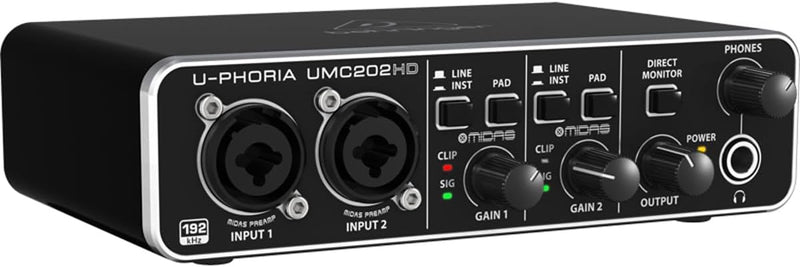
Behringer UMC202HD U-PHORIA USB Audio Interface with MIDAS Preamps
USB 2.0XLR48Vphantom powercondenser
MIDAS-designed preamps and 24-bit/192kHz converters in a rugged 2x2 interface built for clean, detailed studio tracking.
$72.45*$139.00Save 47%
Check availability
*Price sourced from Amazon.com. Last updated:Oct 21, 2026.Price and availability are subject to change — details.
Affiliate Disclosure: As an Amazon Associate, Studio Supplies earns from qualifying purchases made through links on this page, at no additional cost to you. This helps support our editorial team.
Notice a mistake? Let Us Know
Overview
Key Features
STUDIO IN A BLACK BOX: When it’s time to make recording history on your Mac or Windows computer, plug in microphones, instruments or line level sources to the UMC202HD’s 2 combination XLR/TRS inputs for the ultimate in studio flexibility!
MIDAS - THE LEGEND IN SOUND QUALITY: Born in the 1970s, Midas has a long history of innovation in the world of audio mixing. Employed world-wide by the most famous touring acts, Midas consoles have become industry standards. Behringer is proud to incorporate a Midas-designed mic preamp for ultimate high-quality audio reproduction in both live and studio environments.
“ZERO-LATENCY” MONITORING: The UMC202HD allows zero-latency direct monitoring, which means musicians can experience their performance clearly – with no delay or lag in the returning signal. Just press the Direct Monitor switch and enjoy the powerful phones output with its own level control and absolutely no audio delay.
GETTING CONNECTED: On the rear panel of the UMC202HD, you’ll find the USB 2.0 port for simple and easy connection to your computer, along with ¼" TRS Output jacks and a +48V switch for providing phantom power to your condenser mics.
EVERYTHING YOU NEED TO SOUND AMAZING: The U-PHORIA UMC202HD is a powerful 2 input, 2 output USB recording interface featuring genuine Midas-designed mic preamps with exceptional 24-Bit/192kHz high-resolution converters, designed to help your recordings and mixes sound their absolute best.
Specifications
Brand
Behringer
Model
UMC202HD
Type
USB 2.0 Audio Interface
Channels
2 In / 2 Out
Resolution
24-Bit / 192 kHz
Preamplifiers
MIDAS-designed with +48V Phantom Power
Inputs
2x Combo XLR/TRS
Outputs
2x ¼" TRS balanced
Direct Monitoring
Yes (zero-latency hardware)
Hardware Interface
USB 2.0
Construction
Metal chassis
Color
Black
OS Compatibility
Windows, macOS
DAW Compatibility
Pro Tools, Ableton Live, Cubase, FL Studio, Tracktion
Frequently Asked Questions
Does the UMC202HD provide phantom power for condenser microphones?
Yes. The rear panel includes a +48V phantom power switch that supplies power to both XLR inputs simultaneously. Note that the switch is global — you cannot enable phantom power on one channel independently, so avoid plugging in ribbon microphones on either input while phantom power is engaged.
What is the latency like when recording through the UMC202HD?
The unit includes a hardware direct monitoring switch that routes your input signal straight to the headphone and line outputs with zero latency, bypassing the computer entirely. Software monitoring latency depends on your DAW buffer settings and driver, but at 128 samples on ASIO you can expect round-trip latency under 10ms on most systems.
Is this interface compatible with my DAW?
The UMC202HD is class-compliant on macOS and works with any Core Audio-compatible DAW out of the box. On Windows, Behringer provides an ASIO driver. It has been tested with Pro Tools, Ableton Live, Cubase, FL Studio, and Tracktion, but will function with any DAW that recognizes standard USB audio devices.
Can I record two microphones simultaneously at 192kHz?
Yes. Both inputs can record simultaneously at up to 24-bit/192kHz resolution. However, at 192kHz your DAW buffer requirements increase and file sizes grow substantially — most professional tracking sessions run at 48kHz or 96kHz, which this interface handles with no issues.
How does the MIDAS preamp compare to preamps in competing budget interfaces?
The MIDAS-designed preamps in the UMC202HD offer clean gain with low self-noise, providing a neutral signal path that does not color the sound significantly. Compared to other budget interfaces, the MIDAS preamps tend to deliver slightly more headroom before clipping, which is noticeable when tracking louder dynamic sources.
Related Products


