

Beyerdynamic
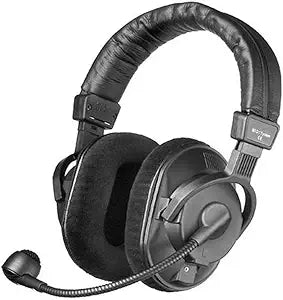
Beyerdynamic AMS-DT-290-MKII-200-250 Broadcasting Headset
★★★★★
A closed-back broadcast headset built for the signal chain — the DT 290 MK II delivers hypercardioid isolation and 250-ohm clarity where every word on air matters.
View price on Amazon
Affiliate Disclosure: Studio Supplies may earn a commission from qualifying purchases made through links on this page, at no additional cost to you. This helps support our editorial team.
Notice a mistake? Let Us Know
Overview
Key Features
Closed dynamic headphone, 250 ohms
Good ambient noise attenuation
Lightweight, low-profile design
Flexible, pivoting gooseneck microphone
Powerful neodymium system for accurate reproduction
Specifications
Headphone Type
Closed Dynamic
Impedance
250 Ohms
Frequency Response
10 – 30,000 Hz
Microphone Type
Dynamic Hypercardioid
Microphone Boom
Flexible Pivoting Gooseneck
Phantom Power Required
No
Driver System
Neodymium
Model
AMS-DT-290-MKII-200-250
Pros & Cons
👍 Pros
- 250-ohm impedance delivers low noise floor and clean signal reproduction on broadcast-grade console outputs
- Hypercardioid dynamic capsule rejects off-axis bleed effectively in live control rooms and noisy broadcast environments
- Closed-back earcup design provides meaningful passive isolation without requiring powered noise cancellation
- Lightweight, low-profile construction reduces fatigue during long broadcast shifts or extended session monitoring
- Flexible gooseneck boom allows precise microphone positioning without mechanical adjustment tools
👎 Cons
- 250-ohm impedance is under-driven by low-power consumer interfaces — requires a console or dedicated amp with adequate output voltage
- Dynamic microphone capsule has a higher noise floor than condenser alternatives, which may be audible in very quiet, acoustically treated broadcast environments
- No integrated pad or roll-off switch on the microphone — gain staging must be managed entirely at the preamp or console
- Closed-back design, while isolating, introduces some low-frequency buildup that can skew bass-heavy monitoring decisions
- Limited to mono microphone output — not suited for stereo recording applications or dual-channel broadcast setups
Frequently Asked Questions
What impedance does the DT 290 MK II headphone use, and do I need a dedicated headphone amp?
The headphone capsule runs at 250 ohms, which means it draws less current but requires more voltage to reach optimal listening levels. Most broadcast consoles and dedicated monitor outputs handle this natively, but a standard USB audio interface may leave you short on headroom — a dedicated amp or mixer with a high-impedance output is the professional choice here.
What polar pattern does the microphone use, and how does that affect bleed rejection?
The microphone is a dynamic hypercardioid, meaning the null points sit off-axis at roughly 110–120 degrees rather than directly to the sides. This provides tighter rejection of room reflections and monitor bleed than a standard cardioid — well-suited for talkback, broadcast booths, and live control rooms where ambient noise is a factor.
Does the microphone require phantom power?
No. The DT 290 MK II uses a dynamic capsule, which is a passive transducer requiring no phantom power. You can connect it directly to any XLR mic input without risk of damage from phantom-powered preamps, though enabling phantom won't harm it either.
How does the closed-back design affect monitoring accuracy during broadcast?
The closed earcups provide passive ambient attenuation, which keeps talent from hearing their own voice excessively in the room and reduces feedback risk in open-mic situations. The tradeoff is a slightly more colored low-end compared to open-back reference headphones — but for on-air monitoring and talkback applications, that isolation is worth more than flat reproduction.
Is the gooseneck microphone boom adjustable for different operators?
Yes. The microphone is mounted on a flexible pivoting gooseneck that can be repositioned to suit different head sizes and mic placement preferences. This is particularly useful in multi-operator broadcast environments where the headset exchanges between talent.
Related Products


