

B+W
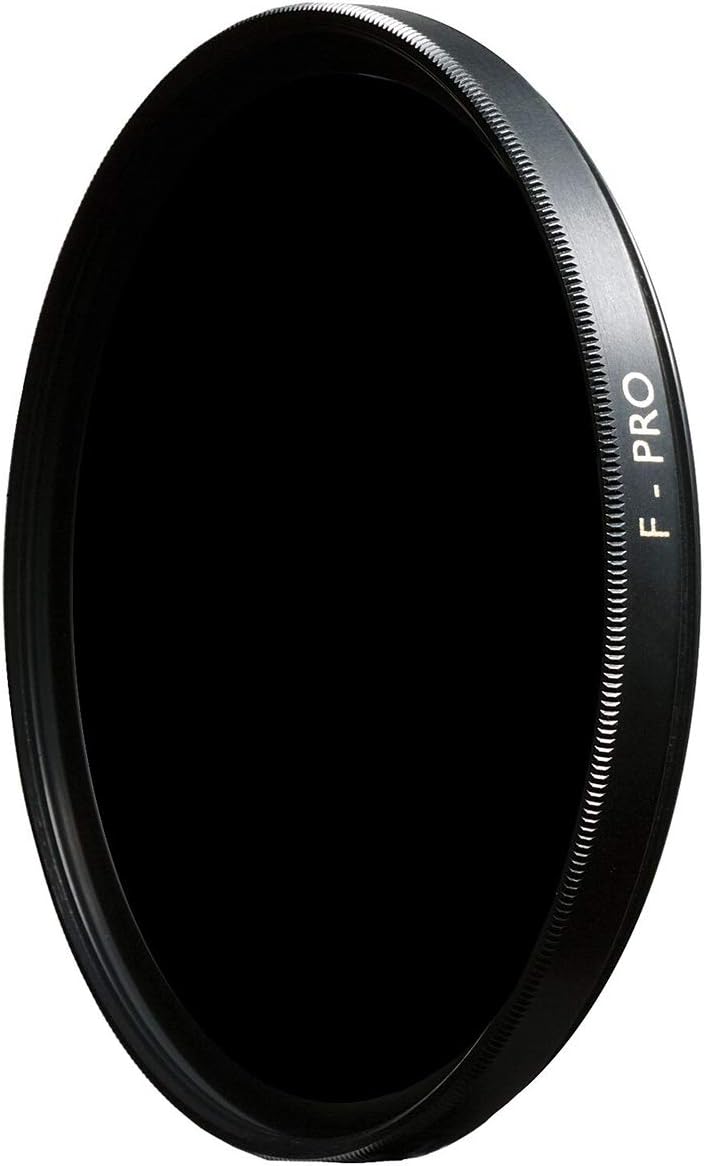
B+W 65-072517 72mm #093 (87C) Infrared Filter
See foliage glow white and skies go black — the B+W 87C infrared filter opens a world of photography that no preset can replicate.
Check availability
Affiliate Disclosure: As an Amazon Associate, Studio Supplies earns from qualifying purchases made through links on this page, at no additional cost to you. This helps support our editorial team.
Notice a mistake? Let Us Know
Overview
Key Features
The Package Length of the Product is 9.4 centimeters
The Package Widht of the Product is 9.4 centimeters
The Package Height of the Product is 1.8 centimeters
Country of Origin: GERMANY
Specifications
Brand
B+W
Model
65-072517
Filter Type
Infrared (#093 / 87C)
Thread Size
72mm
Transmission at 800nm
<1%
Transmission at 900nm
88%
Filter Factor
20–40 (illumination dependent)
Material
Optical Glass
Ring Material
Brass
Coating
None
Water Resistance
Not water resistant
Country of Origin
Germany
Package Dimensions
9.4 x 9.4 x 1.8 cm
Frequently Asked Questions
Does this filter work with unmodified digital cameras?
It works, but with significant limitations. Most modern digital sensors have built-in infrared cut filters that block the very wavelengths this filter passes, requiring exposures of several seconds to minutes even in bright daylight. For practical, responsive infrared shooting, a sensor-modified or infrared-converted camera delivers dramatically better results. Film shooters using infrared-sensitive stock will find it performs as intended.
What does the 87C designation mean, and how does it differ from lighter IR filters?
The 87C refers to the filter's transmission profile — it blocks essentially all visible light (less than 1% transmission at 800nm) and passes near-infrared at 88% transmission at 900nm. This is a deep-cut infrared filter that produces the classic high-contrast look: luminous white foliage, near-black skies. Lighter IR filters with 720nm or 590nm cutoffs allow some visible light and produce more muted, mixed-spectrum effects. The 87C is for photographers who want the full, dramatic infrared rendering.
How do I focus with this filter in place?
The filter blocks all visible light, making optical viewfinder focusing impossible once it's mounted. The standard workflow is to compose and focus before attaching the filter, or to use Live View with a tripod for precise framing. There is also a slight infrared focus shift to account for on non-modern lenses — check your lens markings for the IR focus index.
How much exposure compensation is required?
The filter factor is rated at 20 to 40 depending on light conditions and sensor sensitivity — roughly 4 to 5 stops of additional exposure. A tripod is effectively mandatory for outdoor infrared shooting, even on a bright sunny day.
Does this filter have a coating?
No — this specific B+W model is uncoated. In backlit or high-contrast shooting scenarios, disciplined use of a lens hood and attention to angle of light becomes more important than with coated filters.
Related Products


