



Canon
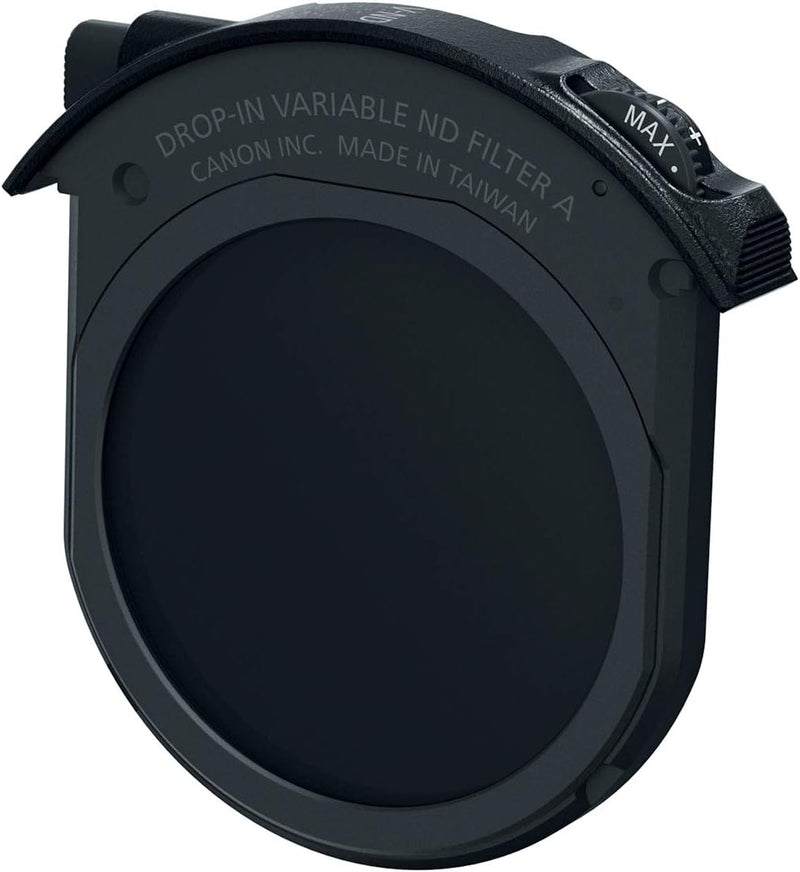
Canon 3446C001 Drop-in Variable ND Filter A
★★★★★
Seamlessly control exposure on your EOS R system with Canon's drop-in variable ND filter for smooth video and creative long exposures.
$399.95*$470.00Save 14%
Check availability
*Price sourced from Amazon.com. Last updated:Jul 14, 2026.Price and availability are subject to change.
Affiliate Disclosure: Studio Supplies may earn a commission from qualifying purchases made through links on this page, at no additional cost to you. This helps support our editorial team.
Notice a mistake? Let Us Know
Overview
Key Features
For use with Canon drop-in filter mount Adapter EF-EOS R
Control exposure in movies
Prolong shutter speeds
Country of Origin:Taiwan
Specifications
Compatibility
Canon Drop-in Filter Mount Adapter EF-EOS R
Filter Type
Variable Neutral Density
Material
Optical Glass
Thread Size
52mm
Effect
Variable ND (adjustable light reduction)
Country of Origin
Taiwan
Pros & Cons
👍 Pros
- Drop-in design eliminates front-of-lens threading, so it works with any EF lens regardless of filter size
- Continuous variable density allows precise exposure adjustments without changing filters mid-shoot
- Optical glass construction maintains image quality consistent with Canon's lens standards
- Compact form factor adds virtually no weight or length to the adapter setup
👎 Cons
- Only compatible with the Canon Drop-in Filter Mount Adapter EF-EOS R, limiting use to one specific adapter
- Significantly more expensive than standard screw-on variable ND filters
- Cross-pattern artifacts can appear at the heaviest ND settings, which is inherent to variable ND polarizer designs
- Cannot be used on RF-native lenses since it requires the EF-to-EOS R adapter
Frequently Asked Questions
Which camera adapters is this filter compatible with?
It is designed exclusively for use with the Canon Drop-in Filter Mount Adapter EF-EOS R, which allows EF and EF-S lenses to mount on EOS R mirrorless bodies.
What is the ND range of this variable filter?
Canon rates this as a variable ND filter that lets you dial through a range of neutral density levels (approximately 1.5 to 9 stops), giving you continuous control over light reduction without swapping filters.
Does this filter affect image sharpness or introduce color casts?
The filter uses optical glass engineered by Canon to maintain sharpness and minimize color shifts across the variable range, though slight warm shifts can appear at the densest settings as with most variable ND filters.
Can I use this filter for still photography or is it only for video?
It works for both. Videographers use it to maintain cinematic shutter angles in bright light, while still photographers use it to achieve long exposures for motion blur effects.
Is the filter easy to adjust while shooting?
Yes. The drop-in design places the ND control ring between the lens and camera body, and you rotate the external dial to adjust density without touching the front of the lens.
Related Products


