



Canon
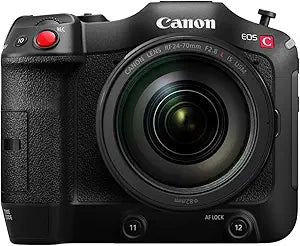
Canon EOS C70 RF24-70mm F2.8 L is USM Kit
★★★★★
Cinema-grade Super 35mm image quality in a compact, RF-mount body — the C70 kit ships ready to shoot with one of Canon's sharpest zoom lenses.
$5,898.00*
View on Amazon
✓ In Stock on Amazon.com
*Price sourced from Amazon.com. Last updated:Jul 14, 2026.Price and availability are subject to change.
Affiliate Disclosure: Studio Supplies may earn a commission from qualifying purchases made through links on this page, at no additional cost to you. This helps support our editorial team.
Notice a mistake? Let Us Know
Overview
Key Features
Canon Super 35mm Dual Gain Output (DGO) Sensor
16+ stops of Total Dynamic Range
DIG!C DV7 Image Processor
Canon Log 2 and 3, PQ, and HLG Recording
RF Mount and EF Lens Compatibility with Mount Adapter EF-EOS R 0.71x
Specifications
Sensor Type
Canon Super 35mm Dual Gain Output (DGO)
Dynamic Range
16+ stops
Image Processor
DIG!C DV7
Recording Formats
Canon Log 2, Canon Log 3, PQ, HLG
Lens Mount
RF Mount
Lens Compatibility
EF Lenses with Mount Adapter EF-EOS R 0.71x
Pros & Cons
👍 Pros
- The DGO sensor's 16+ stops of dynamic range is production-ready for high-contrast scenes — lit interiors against bright windows, outdoor interviews in direct sun — without requiring HDR merging in post.
- Canon Log 2 and 3 recording integrates cleanly into standard post pipelines with widely available LUTs, reducing color correction setup time on deadline-driven productions.
- Built-in variable ND filters eliminate the need for a physical matte box ND system on run-and-gun shoots, significantly reducing rig complexity and setup time.
- RF mount with EF adapter compatibility preserves investment in existing Canon EF lenses while opening access to the RF ecosystem's optical performance.
- Dual Pixel CMOS AF with subject tracking keeps focus locked during documentary-style shooting without a dedicated focus puller, enabling effective single-operator operation.
👎 Cons
- The C70's compact form factor, while advantageous for mobility, can feel underspecified for shoulder-mount or full-rig configurations where a larger cinema body's ergonomics and mounting points provide better balance.
- No built-in XLR inputs on the body itself — audio connection requires the included mini XLR ports, which may necessitate adapters or an external recorder for productions running standard XLR microphones or mixers.
- The RF24-70mm F2.8L IS USM is a premium lens that adds significant weight and cost to the kit — productions needing a lighter or longer configuration will need additional glass on top of the kit price.
- Canon Log 2 footage requires proper LUT management and capable grading hardware; productions without an established Canon color pipeline may face a learning curve on first delivery.
Frequently Asked Questions
What makes the DGO sensor architecture production-significant compared to a standard CMOS sensor?
The Dual Gain Output sensor reads each pixel at two gain settings simultaneously, then combines them — this is what delivers 16+ stops of dynamic range without the clipping and lifted shadows you'd get from standard HDR processing. On set, it means you can expose for a lit subject in a high-contrast scene and retain detail in both the highlights and the shadow fall-off in a single pass, without HDR merging in post.
Does the C70 accept standard EF cinema lenses, or only RF glass?
The C70 is natively RF mount, but Canon includes compatibility with EF lenses via the Mount Adapter EF-EOS R 0.71x. That adapter also provides a 0.71x magnification factor, which partially compensates for the Super 35mm crop — effectively bringing EF lens coverage closer to its full-frame field of view. This matters significantly for productions with an existing EF lens investment.
What log formats does the C70 support, and how do they fit into a standard post pipeline?
The C70 records Canon Log 2, Canon Log 3, PQ (HDR10), and HLG. Canon Log 2 offers the widest dynamic range capture and is the preferred choice for color-critical grading in DaVinci Resolve or Premiere with Canon's supplied LUTs. Canon Log 3 is a shallower curve that's easier to grade quickly on tighter deadlines. PQ and HLG support HDR delivery pipelines directly from camera.
How does the included RF24-70mm F2.8L lens perform for documentary or run-and-gun production work?
The RF24-70mm F2.8L IS USM provides a practical zoom range covering wide establishing shots through short telephoto compression, at a constant f/2.8 aperture. The Nano USM autofocus is fast and quiet — important for on-camera audio — and the built-in IS works in combination with the C70's digital IS for stabilized handheld work. For a single-operator documentary or corporate production setup, this is a highly capable all-day lens.
Does the C70 have built-in ND filters, and what's the practical range?
Yes — the C70 includes built-in electronic variable ND filters, which is a significant production convenience. Rather than swapping physical ND glass mid-shoot to manage exposure in changing light, you can dial the ND internally. This is particularly valuable for run-and-gun or event work where stopping to swap filters isn't practical.
Related Products


