



Canon
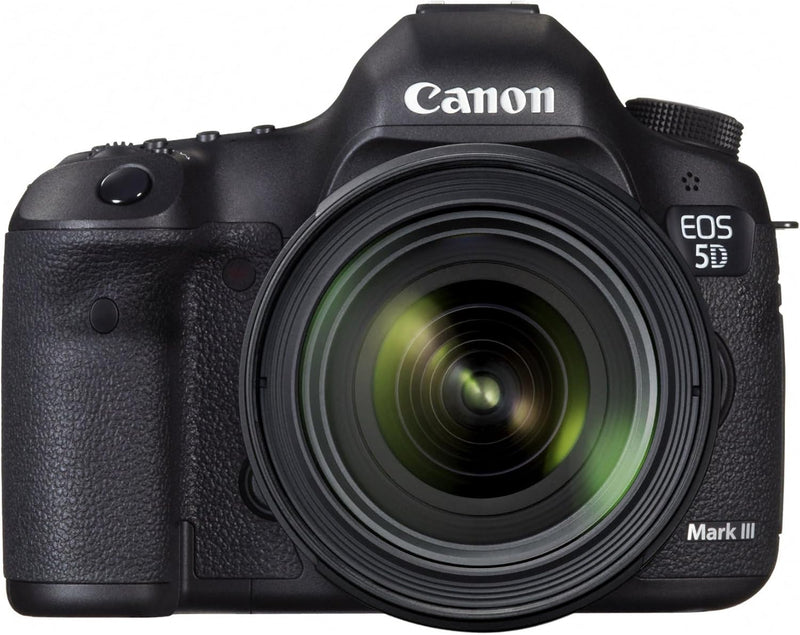
Canon 5260B054 EOS 5D Mark III DSLR Camera 24-70mm
f/4.0f/2.8
The 5D Mark III with the EF 24-70mm f/4L IS delivers tack-sharp full-frame images and a 61-point AF system built to keep pace with professional shoots.
$2,199.00*
View on Amazon
✓ In Stock on Amazon.com
*Price sourced from Amazon.com. Last updated:Oct 23, 2026.Price and availability are subject to change — details.
Affiliate Disclosure: As an Amazon Associate, Studio Supplies earns from qualifying purchases made through links on this page, at no additional cost to you. This helps support our editorial team.
Notice a mistake? Let Us Know
Overview
Key Features
Newly designed 22.3 Megapixel full-frame CMOS sensor, 14-bit A/D conversion, wide range ISO setting 100-25600
New 61-Point High Density Reticular AF including up to 41 cross-type AF points with f/4.0 lens support and 5 dual diagonal AF points (sensitive to f/2.8).
3.2-inch Clear View II LCD monitor, 170 degrees viewing angle, 1,040,000-dot VGA, reflection resistance with multi coating and high-transparency materials for bright and clear viewing
EOS HD Video with manual exposure control and multiple frame rates with 4 GB automatic file partitioning (continuous recording time 29 minutes 59 seconds).
Specifications
Sensor
22.3 MP Full-Frame CMOS
Image Processor
DIGIC 5+
ISO Range
100–25600 (expandable 50–102400)
AF System
61-Point High Density Reticular AF (41 cross-type)
Continuous Shooting
Up to 6.0 fps
LCD Monitor
3.2" Clear View II, 1,040,000 dots, 170° viewing angle
Video
EOS HD (1080p), manual exposure, multiple frame rates
Max Clip Length
29 min 59 sec (4GB auto-partition)
Shutter Durability
Rated 150,000 cycles
Metering
iFCL 63-zone dual-layer
File Formats
JPEG, RAW
Lens Included
EF 24-70mm f/4L IS USM
Connectivity
USB, HDMI
Frequently Asked Questions
Is the EF 24-70mm f/4L IS USM a good general-purpose lens for this body, and what types of shooting does it suit best?
Yes — the 24-70mm range is the classic workhorse focal length for editorial, portrait, travel, and event photography. The f/4L with Image Stabilizer is a compact, sharp option that covers wide environmental shots at 24mm and moderate telephoto compression at 70mm, making it genuinely versatile for a single-lens kit.
How does the 61-point AF system perform in real-world event and portrait shooting?
The 61-point High Density Reticular AF — with 41 cross-type points and 5 dual-diagonal points sensitive to f/2.8 — is one of the most capable phase-detection systems Canon produced for DSLRs. In practice it locks quickly in moderate light and tracks moving subjects reliably at up to 6fps continuous shooting, which holds up in event, wedding, and sports contexts.
What is the usable ISO range for low-light shooting on the 5D Mark III?
The native ISO range runs 100-25600, expandable to 50-102400. The full-frame 22.3MP CMOS sensor produces clean, low-noise files up to ISO 6400 in most shooting conditions — a meaningful advantage over crop-sensor cameras in dim church interiors, reception lighting, or available-light portraits.
Does the 5D Mark III support video, and what are the recording limitations?
Yes — it records EOS HD video with full manual exposure control across multiple frame rates. The primary limitation is a 29-minute 59-second continuous clip cap (a legacy regulatory requirement), with 4GB automatic file partitioning for longer sessions. It does not shoot 4K — this is a 1080p video camera by today's standards.
Is this camera still relevant for professional use given its age?
For still photography, absolutely. The 22.3MP full-frame sensor, 61-point AF, 6fps burst, and 150,000-cycle shutter rating are benchmarks that many working photographers never outgrow. The primary gaps versus current bodies are 4K video absence and no in-body image stabilization — if those matter for your work, they are worth factoring in.
Related Products


