

Canon
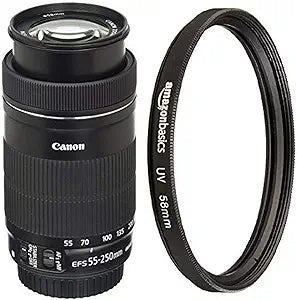
Canon 8546B002 EF-S 55-250mm Lens - STM, UV Filter
★★★★★
Enhance Your Photography with Versatile Zoom CapabilitiesThe Canon EF-S 55-250mm Lens is a versatile zoom lens perfect for capturing distant subjects with clarity and detail. Complete with a UV protection filter, this lens offers excellent image quality and protects your lens from scratches and u...
$307.06*
Check availability
*Price sourced from Amazon.com. Last updated:Jul 14, 2026.Price and availability are subject to change.
Affiliate Disclosure: Studio Supplies may earn a commission from qualifying purchases made through links on this page, at no additional cost to you. This helps support our editorial team.
Notice a mistake? Let Us Know
Overview
Enhance Your Photography with Versatile Zoom Capabilities
The Canon EF-S 55-250mm Lens is a versatile zoom lens perfect for capturing distant subjects with clarity and detail. Complete with a UV protection filter, this lens offers excellent image quality and protects your lens from scratches and ultraviolet light.
Specifications:
- Brand: Canon
- Model: 8546B002
- Focal Length: 55-250mm
- Maximum Aperture: f/4-5.6
- Filter Size: 58mm
- Closest Focusing Distance: 0.85m/2.8 ft
Specifications
Brand
Canon
Model
8546B002
Lens Mount
EF-S
Focal Length
55-250mm
Aperture Range
f/4-5.6
Autofocus Type
STM
Image Stabilization
Yes
Included Accessory
UV Filter
Pros & Cons
👍 Pros
- Features STM (Stepping Motor) for smooth and quiet autofocus, ideal for video recording as well as still photography
- Includes Image Stabilization, which helps to reduce camera shake and produce sharper images, especially at longer focal lengths
- Offers a versatile telephoto zoom range of 55-250mm, suitable for a variety of photographic situations from portraits to sports
- Comes bundled with a UV filter, providing immediate protection for the front lens element against dust, scratches, and UV haze
- Designed specifically for Canon EF-S mount cameras, ensuring full compatibility and optimized performance
- Provides a variable aperture range of f/4-5.6, offering a balance between light gathering and compact design at different zoom settings
👎 Cons
- The variable maximum aperture of f/4-5.6 means it will be less effective in low-light conditions compared to lenses with a constant, wider aperture
- Designed for EF-S mount cameras only, it is not compatible with full-frame Canon EOS cameras
- Plastic construction, typical for this lens class, may not offer the same durability or premium feel as L-series lenses
- While offering image stabilization, it may not be as effective in extreme low-light or very fast action scenarios as more advanced stabilization systems
- The included UV filter, while protective, may not be of professional optical quality, potentially impacting image clarity slightly
Frequently Asked Questions
What does "STM" refer to in this lens's description?
"STM" stands for Stepping Motor, which indicates that this Canon EF-S 55-250mm lens has a smooth and quiet autofocus system, making it particularly suitable for video recording.
Does this lens include image stabilization?
Yes, the Canon EF-S 55-250mm lens features Image Stabilization (IS), which helps to reduce blur caused by camera shake, especially when shooting handheld or at longer focal lengths.
What type of cameras is this lens compatible with?
This lens is designed for Canon EF-S mount cameras, meaning it is compatible with Canon EOS DSLRs that use the EF-S lens mount.
What is the purpose of the included UV filter?
The included UV filter serves to protect the front element of the lens from dust, scratches, and impacts, while also reducing UV haze in photographs.
What kind of photography is this 55-250mm lens suitable for?
With its telephoto zoom range, this lens is suitable for capturing distant subjects, such as wildlife, sports, and portraits, allowing you to bring subjects closer.
Can this lens perform well in low-light environments?
The variable maximum aperture of f/4-5.6 means that while it is a versatile lens, it may require higher ISO settings or slower shutter speeds in low-light conditions compared to lenses with wider, fixed apertures.
Related Products


