

Cokin
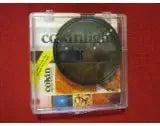
Cokin Circular Polarizer 49mm Filter - Glare Reduction
Cokin's 49mm circular polarizer cuts glare and deepens sky contrast on compact lenses — a field essential for landscape and outdoor work.
$48.50*
View on Amazon
✓ In Stock on Amazon.com
*Price sourced from Amazon.com. Last updated:Aug 28, 2026.Price and availability are subject to change — details.
Affiliate Disclosure: As an Amazon Associate, Studio Supplies earns from qualifying purchases made through links on this page, at no additional cost to you. This helps support our editorial team.
Notice a mistake? Let Us Know
Overview
Key Features
49mm Filter Size
Made by Cokin
Variable Circular Polarizer
Specifications
Brand
Cokin
Filter Type
Circular Polarizer
Filter Diameter
49mm
Mount
Standard threaded screw-on
Function
Glare reduction, contrast enhancement
Frequently Asked Questions
What is the practical difference between a circular polarizer and a linear polarizer for digital cameras?
Circular polarizers are the correct choice for modern digital cameras with phase-detection or through-the-lens autofocus systems. Linear polarizers can interfere with these metering and AF mechanisms. The Cokin 49mm filter is a circular polarizer, meaning it works transparently with your camera's autofocus and metering without causing errors.
How do I adjust this filter to maximize the polarization effect?
Rotate the front element of the filter while looking through the viewfinder or at the LCD. You'll see reflections reduce and sky saturation increase as you rotate. Maximum effect occurs when the light source is at roughly 90 degrees to your shooting axis — pointing directly at or away from the sun produces minimal polarization.
Will this filter cause vignetting on wide-angle lenses with a 49mm thread?
Vignetting risk depends on the specific lens and the filter's physical thickness. Standard-thickness polarizers can cause corner darkening on very wide-angle lenses (below approximately 24mm equivalent). On the compact kit lenses commonly using 49mm threads — such as 35mm primes or 18-55mm zooms — vignetting is typically not an issue at moderate focal lengths.
How much light does this polarizer absorb, and how should I compensate?
A standard circular polarizer reduces light transmission by approximately 1.5 to 2 stops depending on rotation angle. Your camera's through-the-lens metering will compensate automatically in aperture priority or program modes; in manual mode, open the aperture, lower the shutter speed, or raise ISO to maintain proper exposure.
Does this filter affect colors beyond cutting reflections?
Yes. Beyond reflection removal, the polarizer increases color saturation — most noticeably in blue skies and foliage — by removing scattered surface light that dilutes color intensity. Water surfaces, wet rocks, and glass all show increased color depth and contrast when reflections are polarized out.
Related Products


