



Cokin
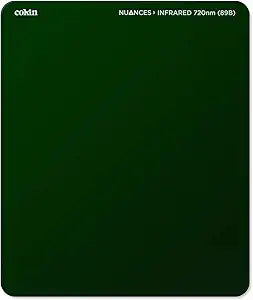
Cokin P0072 NUANCES Extreme Infrared Filter P-Series
Transform familiar scenes into otherworldly silver-leaved dreamscapes with Cokin's dedicated 720nm infrared glass.
$209.99*
View on Amazon
✓ In Stock on Amazon.com
*Price sourced from Amazon.com. Last updated:Aug 28, 2026.Price and availability are subject to change — details.
Affiliate Disclosure: As an Amazon Associate, Studio Supplies earns from qualifying purchases made through links on this page, at no additional cost to you. This helps support our editorial team.
Notice a mistake? Let Us Know
Overview
Key Features
For Cokin P Series Holders
Passes Visible & IR Light At/Above 670nm
Blocks UV & Visible Light Under 670nm
50% of IR 720nm Can Pass
Hydrophobic coatings result in an improved beading effect when in contact with water for greater cleaning efficiency
Specifications
Compatibility
Cokin P-Series Holders
Light Transmission
Passes visible and IR light at/above 670nm
Light Blocking
Blocks UV and visible light below 670nm
Infrared Pass
50% at 720nm
Construction
All-glass
Coating
Hydrophobic
Format
P-Series (slot-in)
Frequently Asked Questions
Does this filter require extremely long exposures?
Yes — plan for it. At 720nm, you're blocking most visible light, which means exposures in bright sun can run from 30 seconds to several minutes depending on your sensor's IR sensitivity. Cameras vary widely; some Sony and Fujifilm sensors are notably more IR-sensitive than others. A sturdy tripod is non-negotiable.
Is this filter compatible with any Cokin P-Series holder, or does it require a specific one?
It fits any standard Cokin P-Series holder. The filter slides into the P-Series slot just like any other P-format glass. Make sure your adapter ring matches your lens thread diameter — the holder itself is the common element, not the filter.
Can I use live view or do I need to compose before attaching the filter?
Compose and focus before attaching the filter. Through heavy IR filtration, live view becomes nearly black, making accurate composition and AF nearly impossible. Lock focus manually on your subject, note your framing, then slide the filter in and shoot on bulb or a long preset exposure.
What kind of visual effect does the 720nm cutoff produce compared to 850nm or 950nm filters?
The 720nm cutoff is considered a "near infrared" entry point — you get the classic infrared look (white foliage, darkened skies) but with some residual color information remaining, which gives you more flexibility in post-processing. Stronger cutoffs like 850nm or 950nm produce a more monochromatic result straight out of camera.
Does the hydrophobic coating meaningfully affect image quality or is it purely a maintenance feature?
It's a durability and maintenance feature. The hydrophobic coating keeps water from sheeting across the filter surface and ensures easier cleaning after outdoor use — it doesn't alter the optical transmission characteristics of the filter.
Related Products


