

Cokin
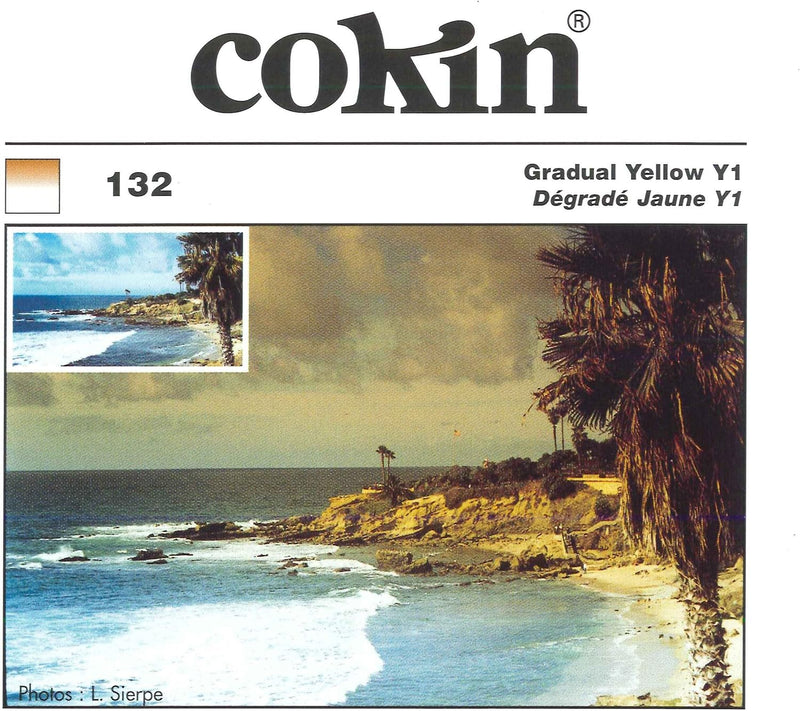
Cokin P132 Gradual Yellow Y1 Filter P-Series
Enhance Your Landscape Photography with Gradual Color Control The Cokin P132 Gradual Yellow Y1 Filter allows you to selectively add color and contrast to your images. Perfect for enhancing skies and creating dramatic effects, this filter offers creative control over your photography. Specificat...
$14.99*$29.99Save 50%
View on Amazon
✓ In Stock on Amazon.com
*Price sourced from Amazon.com. Last updated:Aug 27, 2026.Price and availability are subject to change — details.
Affiliate Disclosure: As an Amazon Associate, Studio Supplies earns from qualifying purchases made through links on this page, at no additional cost to you. This helps support our editorial team.
Notice a mistake? Let Us Know
Overview
Enhance Your Landscape Photography with Gradual Color Control
The Cokin P132 Gradual Yellow Y1 Filter allows you to selectively add color and contrast to your images. Perfect for enhancing skies and creating dramatic effects, this filter offers creative control over your photography.
Specifications:
- Filter Type: Gradual Yellow Y1
- Filter Series: Cokin P-Series
- Light Reduction: Up to 2-stop
- Edge Type: Hard Edge
- Material: C39 optical resin
Key Features
Fits Cokin P-Series filter holder
Adds color in select areas
Manufactured with C39 optical resin
Up to 2-stop light reduction with hard Edge
Great for enhancing sky on flat days
Specifications
Brand
Cokin
Model Number
P132
Filter Type
Gradual Yellow (Y1)
Series
P-Series
Material
C39 Optical Resin
Light Reduction
Up to 2-stop
Edge Type
Hard Edge
Frequently Asked Questions
What filter holder is the Cokin P132 Gradual Yellow Y1 Filter compatible with?
The Cokin P132 Gradual Yellow Y1 Filter is designed to fit the Cokin P-Series filter holder, ensuring proper functionality within that system.
What is the primary artistic effect of using the Cokin P132 filter?
This filter adds a gradual yellow color in select areas of your photograph, which is particularly great for enhancing skies on flat days, providing more visual interest and drama.
What material is the Cokin P132 filter made from?
The Cokin P132 filter is manufactured with C39 optical resin, which is a common material used for photographic filters due to its optical properties.
How much light reduction does this filter provide?
The Cokin P132 Gradual Yellow Y1 Filter offers up to a 2-stop light reduction, allowing for some control over exposure in specific parts of your image.
Does the color transition on the Cokin P132 filter have a soft or hard edge?
This specific filter features a hard edge transition, which means the gradual yellow effect changes more distinctly across the filter.
Related Products


