



Crown
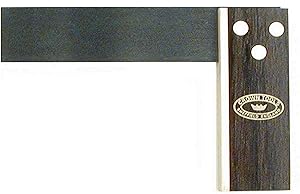
Crown 127 12-Inch Try Square with Rosewood Handle
Sheffield-made hardened steel and rosewood give this 12-inch try square the precision and rigidity to keep your joinery and framing square through years of heavy use.
$36.94*
View on Amazon
✓ In Stock on Amazon.com
*Price sourced from Amazon.com. Last updated:Aug 28, 2026.Price and availability are subject to change — details.
Affiliate Disclosure: As an Amazon Associate, Studio Supplies earns from qualifying purchases made through links on this page, at no additional cost to you. This helps support our editorial team.
Notice a mistake? Let Us Know
Overview
Key Features
Exceptional quality tool from Crown Hand Tools Ltd, Sheffield, England
Great for measuring right angles
Rosewood Handle
Hardened, tempered and blued steel blade
Size: 12"
Specifications
Brand
Crown
Tool Type
Try Square
Handle Material
Rosewood
Blade Material
Hardened, tempered, and blued steel
Size
12 inches
Frequently Asked Questions
Is the 12-inch blade length appropriate for checking squareness on dimensional lumber and framing?
Yes. The 12-inch blade gives you enough reach to check squareness across the face of a 2x10, a stair tread, or a wide cabinet panel in a single placement. For standard dimensional lumber (2x4 through 2x12), 12 inches is the practical sweet spot — large enough for broad checking without being unwieldy for bench work.
What does "hardened, tempered, and blued" mean for the blade's practical performance?
Hardening increases the steel's resistance to bending and deformation — the blade holds its set under the repeated impacts and pressure of shop use. Tempering reduces brittleness from the hardening process so the blade resists chipping at the edges. Bluing is a surface treatment that provides modest corrosion resistance, extending the blade's working life in shop environments. Together these treatments mean the blade is less likely to flex, chip, or rust in normal use compared to bare mild steel alternatives.
How does the rosewood handle affect grip and durability compared to plastic handles?
Rosewood is a dense, close-grained hardwood that resists moisture absorption and doesn't become slippery with use — it maintains a consistent grip whether your hands are dry or lightly oiled from working wood. It's also dimensionally stable, meaning the handle-to-blade joint maintains its squareness over time rather than shifting as a plastic handle might under temperature cycling in an unheated shop.
Is this try square accurate enough for precision joinery and furniture making?
Crown Hand Tools Ltd manufactures to traditional Sheffield toolmaking standards — this is a precision-ground tool, not a mass-market commodity. For hand-cut dovetails, mortise and tenon layout, and furniture carriage work, the blade is ground to a reliable 90-degree reference. As with any precision square, it's worth checking it against a known reference when new and periodically thereafter.
Can this try square be used for layout work, or is it primarily for checking squareness?
A try square is a layout tool as well as a checking tool. You can run a marking knife or pencil along the blade to scribe a perpendicular line across a board — accurate enough for hand-tool joinery layout. The 12-inch blade length gives you a useful scribing reference for wide boards where a small engineer's square would require multiple passes.
Related Products


