



Datacolor
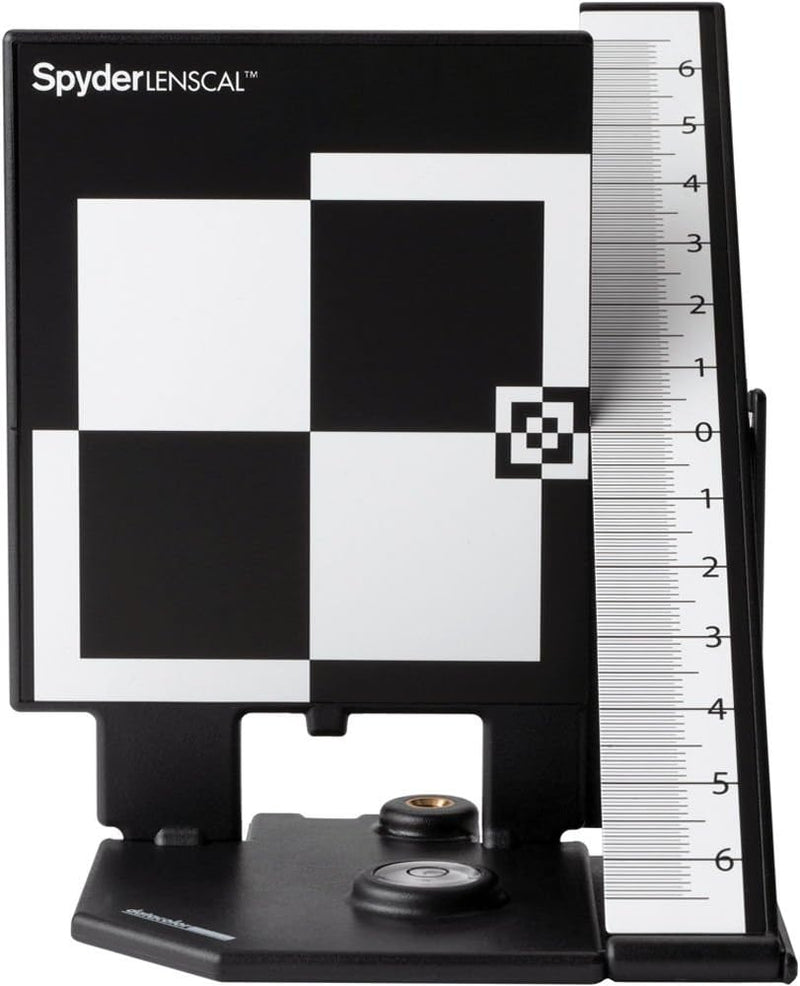
Datacolor DC SLC100 SpyderLensCal Lens Focus Calibration Tool
★★★★★
Stop losing shots to front- or back-focus — the SpyderLensCal gives you a fast, repeatable method for dialing in autofocus calibration on every lens in your bag.
$68.95*
Check availability
*Price sourced from Amazon.com. Last updated:Jul 14, 2026.Price and availability are subject to change.
Affiliate Disclosure: Studio Supplies may earn a commission from qualifying purchases made through links on this page, at no additional cost to you. This helps support our editorial team.
Notice a mistake? Let Us Know
Overview
Key Features
Fast, reliable method of measuring focus on camera and lens combinations
Integrated level and tri-pod mount
Specifications
Compatibility
DSLR or camera with autofocus fine-tune/micro-adjustment
Tripod Mount
Integrated standard tripod thread
Level
Integrated bubble level
Pros & Cons
👍 Pros
- The integrated bubble level ensures the calibration target is perfectly perpendicular to the lens axis every time, removing setup error from the calibration process.
- The built-in tripod mount provides a stable, repeatable positioning platform — critical for getting consistent results across multiple test shots.
- Compact and lightweight, so it travels easily in a camera bag and can be used for a quick calibration check on location before an important shoot.
- The angled calibration ruler makes front- and back-focus error immediately readable in the frame, so you can see the direction and magnitude of the offset at a glance.
- Works with any lens brand or focal length as long as the camera body supports AF micro-adjustment, making it a universal tool across a mixed-lens kit.
👎 Cons
- Only useful if your camera body has an AF fine-tune or micro-adjustment menu option — cameras without this feature make the tool's diagnosis irrelevant.
- The calibration process requires shooting in controlled, consistent lighting to accurately read the focal plane; outdoor or variable-light environments complicate the process.
- Provides no software analysis or guided workflow — interpreting the results and dialing in the correct offset value requires some experience with AF calibration methodology.
- The tool itself is small, and at longer focal lengths where working distance is large, precise physical leveling becomes more critical and slightly more cumbersome to manage solo.
Frequently Asked Questions
What kind of camera do I need to use the SpyderLensCal?
You need a DSLR or mirrorless camera that has an autofocus fine-tune or micro-adjustment setting in the menu. Without that in-camera correction capability, the tool can identify focus error but you won't have a way to correct it.
Does the SpyderLensCal work with mirrorless cameras?
It works as a focus target with mirrorless cameras, but AF micro-adjustment is less commonly needed on mirrorless systems since they focus directly on the sensor plane. Its primary value is for DSLR phase-detect calibration where front/back focus is a recurring issue.
How do I actually use this tool on a shoot day?
Set up the SpyderLensCal on a tripod using its integrated tripod mount, level it with the built-in bubble level, position your camera at the recommended distance for the focal length being tested, shoot wide open, and read the focus plane against the calibration ruler. Adjust the camera's AF fine-tune setting and repeat until the focal plane lands precisely at the target mark.
Do I need to calibrate each lens separately?
Yes — AF calibration is a per-lens-per-body combination. A lens that calibrates correctly on one body may need a different offset value on another. The SpyderLensCal lets you run each pairing independently and store separate offset values in your camera.
Is the SpyderLensCal compatible with all lens mounts and brands?
The tool itself is mount-agnostic — it's a physical target, not an electronic device. As long as your camera body supports AF fine-tune/micro-adjustment, you can use it with any lens on any system.
Related Products


