



DJI
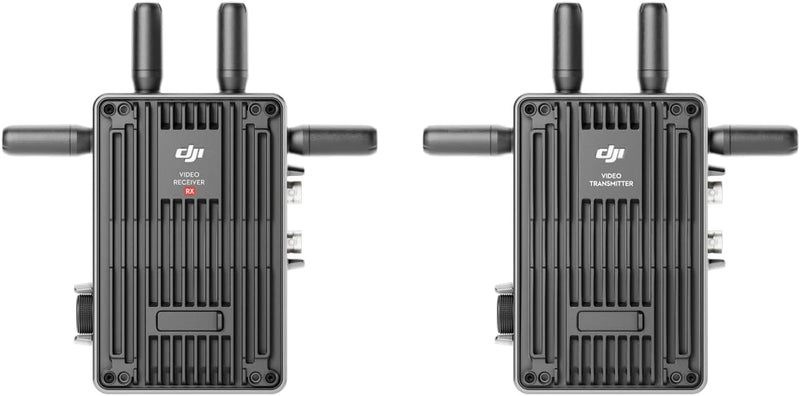
DJI CP.RN.00000318.03 Transmission Standard Combo 20000ft
1080p
DJI O3 Pro technology delivers 6km wireless video transmission at 50Mbps with dual SDI+HDMI output and metadata passthrough for professional monitoring anywhere on set.
$1,983.54*
View on Amazon
✓ In Stock on Amazon.com
*Price sourced from Amazon.com. Last updated:Aug 28, 2026.Price and availability are subject to change — details.
Affiliate Disclosure: As an Amazon Associate, Studio Supplies earns from qualifying purchases made through links on this page, at no additional cost to you. This helps support our editorial team.
Notice a mistake? Let Us Know
Overview
Key Features
20,000ft 1080p/60fps Transmission - DJI Video Receiver adopts O3 Pro image transmission technology, providing a 20,000ft (6 km) range, 50Mbps bitrate, and 16-bit 48kHz real-time audio monitoring.
Unlimited Number of Receivers - When using Broadcast mode, the DJI Video Receiver can support the use of an unlimited number of monitoring devices.
Seamless Auto Frequency Hopping - O3 Pro video transmission technology features 2.4 GHz and 5.8 GHz along with DFS frequency bands to meet the needs of professional studios for stable and reliable transmission.
End-to-End Ultra-Low Latency - The DJI Video Receiver uses the same chip solution as DJI Ronin 4D. Each link of the transmission process has been optimized for an end-to-end ultra-low latency experience.
Transmits Metadata via SDI - The DJI Video Receiver supports metadata transmission via SDI, making it especially suitable for use with large monitors.
Dual-Link SDI + HDMI Simultaneous Output - SDI and HDMI out are supported for additional monitoring and control options as well as the transmission of metadata information.
Includes DJI Video Transmitter, DJI Video Receiver, and more.
This combo delivers extended-range, low-latency transmission, and supports metadata transmission via SDI, making it especially suitable for use with large monitors.
Specifications
Transmission Range
20,000ft (6 km)
Video Resolution
1080p/60fps
Bitrate
50Mbps
Audio Monitoring
16-bit 48kHz real-time
Frequency Bands
2.4 GHz, 5.8 GHz, DFS
Latency
End-to-End Ultra-Low
Metadata Transmission
Supported via SDI
Video Outputs
Dual-Link SDI, HDMI
Included Components
DJI Video Transmitter, DJI Video Receiver
Frequently Asked Questions
What is the actual latency of the DJI Transmission Standard Combo on a live set?
DJI describes the end-to-end latency as "ultra-low," using the same chip solution as the DJI Ronin 4D. Specific millisecond figures are not published in product documentation. For live directing and focus pulling, the latency is low enough for practical use — but for frame-accurate live switching or broadcast applications with hardened latency budgets, verify against your specific workflow requirements before deployment.
Can the DJI Transmission system carry multiple simultaneous receivers without image degradation?
Yes — in Broadcast mode, the system supports an unlimited number of monitoring devices receiving the signal simultaneously without per-receiver bandwidth penalties. This makes it practical for multi-department monitoring: director, DIT, script supervisor, and client monitor can all receive the same feed.
What does metadata transmission via SDI enable on this system?
The DJI Video Receiver outputs camera metadata — including lens data and camera state information — embedded in the SDI signal. This is particularly useful when connected to large monitors that can decode and display the metadata as an overlay, enabling on-set focus confirmation, iris readback, and clip identification without a separate data cable run.
How does the O3 Pro frequency hopping handle crowded RF environments like large studio productions?
O3 Pro operates across 2.4 GHz, 5.8 GHz, and DFS frequency bands with automatic frequency hopping to avoid interference. In complex RF environments with multiple wireless systems running simultaneously, DFS band access provides additional spectrum that typical consumer wireless video systems cannot use. That said, productions running dense RF environments (IEM systems, wireless audio, multiple video hops) should still conduct RF coordination prior to production.
What are the video output specifications, and can it feed both an on-set monitor and a video village simultaneously?
The receiver outputs Dual-Link SDI and HDMI simultaneously. This means you can feed a large on-set monitor via SDI while simultaneously outputting to an HDMI monitor at video village — both active at the same time from a single receiver unit. The transmission resolution is 1080p at up to 60fps at 50Mbps bitrate.
Related Products
