



Elgato
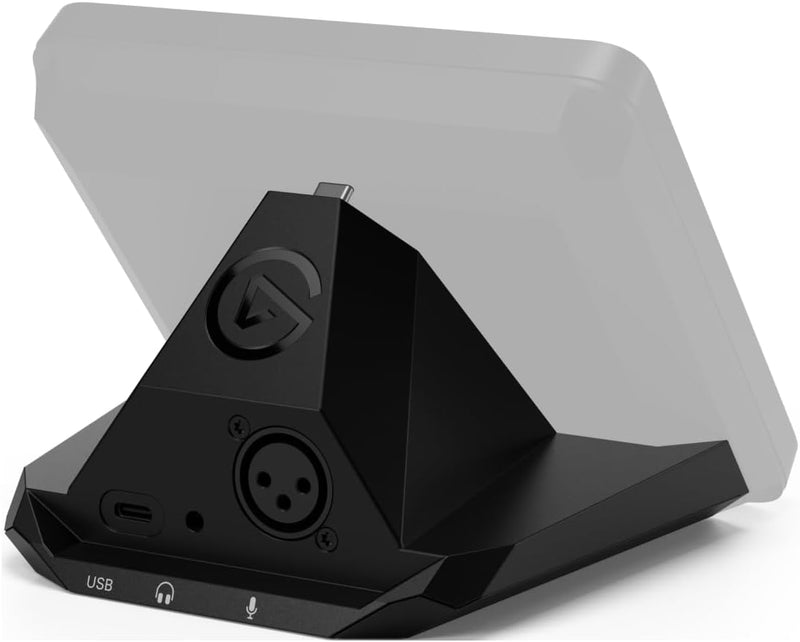
Elgato 20GBM9901 XLR Dock: Stream Deck Audio Interface
XLRcondenserPhantom Power
Elevate Your Stream with the Elgato XLR DockTransform your Stream Deck + into a powerful audio interface with the Elgato XLR Dock. This sleek device seamlessly integrates with your Stream Deck +, providing high-quality XLR microphone input, customizable audio mixing, and space-saving design. Unle...
$119.99*$139.25Save 13%
Check availability
*Price sourced from Amazon.com. Last updated:Aug 27, 2026.Price and availability are subject to change — details.
Affiliate Disclosure: As an Amazon Associate, Studio Supplies earns from qualifying purchases made through links on this page, at no additional cost to you. This helps support our editorial team.
Notice a mistake? Let Us Know
Overview
Elevate Your Stream with the Elgato XLR Dock
Transform your Stream Deck + into a powerful audio interface with the Elgato XLR Dock. This sleek device seamlessly integrates with your Stream Deck +, providing high-quality XLR microphone input, customizable audio mixing, and space-saving design. Unleash your creativity and streamline your workflow with this essential streaming accessory.
Detailed Specifications:
- Frequency Response: 20 Hz – 20 kHz
- Dynamic Range: 100 dB (120 dB with Clipguard)
- Equivalent Input Noise (EIN): -130 dBV at 60 dB gain
- Gain Range: 0 – 75 dB
- Phantom Power: 48 V DC, 7 mA
- Max Input Level: 10 V at 0 dB gain (with Clipguard)
- Max Output Level: 77 mW
- Resolution: 24-bit
- Sample Rate: 48 kHz
- Interface: USB 2.0, Type-C
- Dimensions: 137 (W) x 115 (D) x 76 (H) mm | 5.39 x 4.53 x 2.99 in
- Weight: 169 g | 5.96 oz
- System Requirements: Windows 10 (64-bit) or later, macOS 13 or later
Key Features
Audio interface, For Stream Deck +: Connect an XLR mic to your computer via USB. Designed to replace standalone interfaces.
Loud and clear: 75 dB of gain to amplify your dynamic microphone. Brings condenser mics to life with 48 V Phantom Power.
Saves space, Free a port: Stows away out of sight to minimize desk clutter. Connect both devices via one USB cable, not two.
One for all: Control your entire setup—audio, video, anything.
Easy install: Assemble in minutes using only your screwdriver
Specifications
Product Type
Audio Interface
Connectivity
USB
Microphone Input
XLR
Gain
75 dB
Phantom Power
48 V
Compatibility
Stream Deck +
Installation
Screwdriver assembly
Frequently Asked Questions
What type of microphone can I connect to the Elgato XLR Dock?
You can connect an XLR microphone to the Elgato XLR Dock, allowing you to interface it with your computer via USB.
Does this audio interface provide power for condenser microphones?
Yes, the Elgato XLR Dock is capable of bringing condenser mics to life with its 48 V Phantom Power supply.
How much gain does the XLR Dock provide for microphones?
The XLR Dock offers a significant 75 dB of gain, designed to amplify your dynamic microphone loudly and clearly.
Can this device help reduce desk clutter?
Yes, it is designed to save space and minimize desk clutter by stowing away out of sight, and it connects both itself and a Stream Deck + via one USB cable.
Is the Elgato XLR Dock compatible with all audio setups?
The XLR Dock is specifically designed as an audio interface for the Stream Deck +, implying its primary integration is within that ecosystem.
Related Products


