

Focusrite
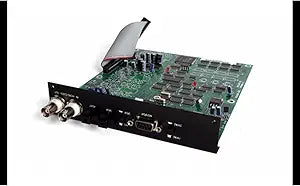
Focusrite ISA Stereo ADC Card
High-Quality Analog-to-Digital Conversion for Your ISA OneThe Focusrite ISA Stereo ADC is a 24-bit/192kHz A/D conversion card designed specifically for the ISA One Microphone Preamp. With AES/EBU, ADAT Connects, and S/PDIF outputs, this card delivers pristine digital audio quality for professiona...
View price on Amazon
Affiliate Disclosure: As an Amazon Associate, Studio Supplies earns from qualifying purchases made through links on this page, at no additional cost to you. This helps support our editorial team.
Notice a mistake? Let Us Know
Overview
High-Quality Analog-to-Digital Conversion for Your ISA One
The Focusrite ISA Stereo ADC is a 24-bit/192kHz A/D conversion card designed specifically for the ISA One Microphone Preamp. With AES/EBU, ADAT Connects, and S/PDIF outputs, this card delivers pristine digital audio quality for professional recording applications.
- Conversion: 24-bit/192kHz A/D
- Compatibility: ISA One Microphone Preamp
- Connectivity: AES/EBU, ADAT Connects, S/PDIF
Key Features
24-bit/192kHz A/D Conversion Card f the ISA One Microphone Preamp with AES/EBU
ADAT Connects
S/PDIF
Specifications
Product Type
A/D Conversion Card
Compatibility
Focusrite ISA One Microphone Preamp
Resolution
24-bit
Sample Rate
192kHz
Digital Outputs
AES/EBU, ADAT, S/PDIF
Frequently Asked Questions
What is the primary function of the Focusrite ISA Stereo ADC Card?
The Focusrite ISA Stereo ADC Card provides 24-bit/192kHz analog-to-digital conversion capabilities, specifically designed to integrate with the ISA One Microphone Preamp.
Which Focusrite product is this ADC card compatible with?
This ADC card is designed for the ISA One Microphone Preamp, enhancing its functionality with digital output options.
What are the digital output formats supported by this card?
The card supports AES/EBU, ADAT, and S/PDIF digital output formats, offering versatile connectivity to various digital audio equipment.
What is the maximum resolution and sample rate for audio conversion?
The ISA Stereo ADC Card is capable of converting audio at a high resolution of 24-bit and a sample rate of up to 192kHz.
Does this card function as a standalone audio interface?
No, this is an A/D conversion card that requires the Focusrite ISA One Microphone Preamp to operate; it is not a standalone audio interface.
Related Products


