



Fujifilm
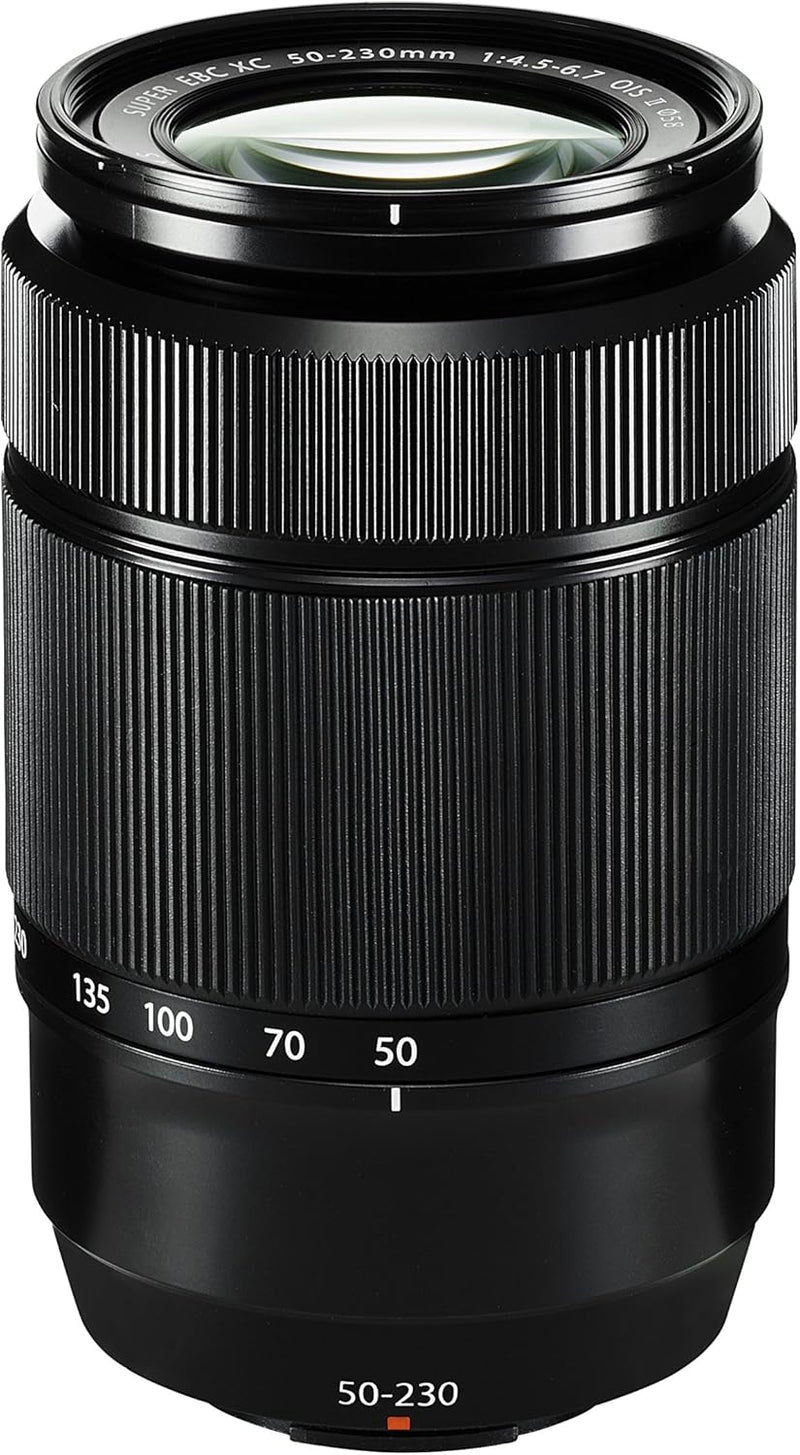
Fujifilm 50-230mm XC OIS II Zoom Lens Renewed
★★★★★
7874015689W
The XC 50-230mm OIS II turns your Fujifilm X-mount body into a 76–350mm equivalent reach platform — renewed optics, real telephoto capability for wildlife, sports, and compressed landscapes.
$309.95*$406.51Save 23%
View on Amazon
✓ In Stock on Amazon.com
*Price sourced from Amazon.com. Last updated:Jul 14, 2026.Price and availability are subject to change.
Affiliate Disclosure: Studio Supplies may earn a commission from qualifying purchases made through links on this page, at no additional cost to you. This helps support our editorial team.
Notice a mistake? Let Us Know
Overview
Key Features
Item Package Dimension: 7.5590551104L X 5.7874015689W X 4.6062992079H Inches
Item Package Weight - 1.43520932562 Pounds
Item Package Quantity - 1
Product Type - Camera Lenses
Specifications
Mount
Fujifilm X-Mount
Focal Length
50–230mm (76–350mm equivalent)
Maximum Aperture
f/4.5 (wide) — f/6.7 (tele)
Minimum Aperture
f/22
Lens Construction
10 groups, 13 elements (1 aspherical, 1 ED)
Aperture Blades
7 (circular)
Minimum Focus Distance
1.1m
Maximum Magnification
0.2x
Filter Thread
58mm
Stabilization
OIS II
Condition
Renewed
Pros & Cons
👍 Pros
- The 76–350mm equivalent reach covers bird-in-flight, wildlife at distance, and compressed sports photography from a single lens without requiring a dedicated prime telephoto
- OIS II delivers 2–3 stops of hand-held stabilization advantage at the telephoto end, enabling sharp shots in conditions where an unstabilized 230mm would require a tripod
- 0.2x maximum magnification at the telephoto end produces attractive compressed close-ups of flowers and small subjects that a standard zoom cannot achieve
- 58mm filter thread is a common diameter, allowing a single circular polarizer or ND filter to serve multiple lenses in the kit without additional purchases
- Renewed pricing provides access to a well-regarded Fujifilm optical formula at significantly below new retail cost, lowering the barrier for X-mount photographers adding reach
👎 Cons
- Maximum aperture narrows to f/6.7 at 230mm — in anything other than bright daylight, the long end requires elevated ISO, OIS reliance, or a tripod to produce sharp results
- Variable aperture complicates manual exposure management during zoom pulls — the aperture change requires active compensation for shooters not working in auto exposure modes
- Renewed status means no Fujifilm warranty coverage — optical condition depends entirely on the prior handling history and the refurbisher's inspection standards
- Plastic lens barrel construction keeps weight manageable but doesn't inspire confidence in rough field conditions the way metal-barreled alternatives do
- 1.1m minimum focus distance prevents focusing on subjects closer than arm's length, which is a practical limitation for event photographers shooting detail shots in tight spaces
Frequently Asked Questions
What is the 35mm equivalent focal range on Fujifilm X-mount bodies?
On Fujifilm's APS-C X-mount system with its 1.52x crop factor, the 50–230mm range translates to approximately 76–350mm equivalent. The wide end covers portrait and short-telephoto scenarios; the long end delivers compressed-background wildlife and sports reach that would require a significantly more expensive lens on a full-frame system.
How effective is OIS II for hand-held shooting at the long end?
Fujifilm's second-generation OIS provides meaningful stabilization benefit at the 230mm end — roughly 2–3 stops of effective hand-held advantage. In overcast or indoor long-lens situations, OIS allows sharp shots at shutter speeds that would produce motion blur without stabilization.
Can this lens serve as a macro alternative at minimum focus distance?
Not a true macro. Minimum focus distance is 1.1m, with maximum magnification of 0.2x at the telephoto end. The compression at 230mm/1.1m produces attractive close-ups of flowers and small subjects with pleasing background separation, but dedicated macro shooting requires a purpose-built macro lens.
Does the renewed condition affect optical performance or coating integrity?
Properly renewed lenses go through element inspection for internal dust, fungus, and coating degradation. Key items to verify are element clarity and OIS unit function, both of which are assessable through test shots. Confirm the seller's inspection process and return policy before purchase, as with any renewed optical item.
What filter thread size does this lens use?
58mm — a common size for which circular polarizers, ND filters, and UV protectors are widely available. Photographers already running 58mm filters in their kit can share glass across lenses without additional filter purchases.
Related Products


