
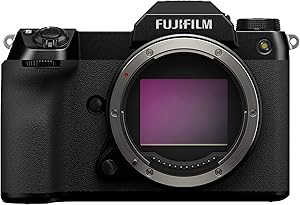


Fujifilm
Fujifilm GFX 100S Body - 102MP Mirrorless Camera
When 102 megapixels meet medium format in a body you can handhold, every detail of the scene becomes a creative decision.
$6,995.00*
View on Amazon
✓ In Stock on Amazon.com
*Price sourced from Amazon.com. Last updated:Aug 30, 2026.Price and availability are subject to change — details.
Affiliate Disclosure: As an Amazon Associate, Studio Supplies earns from qualifying purchases made through links on this page, at no additional cost to you. This helps support our editorial team.
Notice a mistake? Let Us Know
Overview
Specifications
Sensor
102MP Back-Illuminated CMOS
Sensor Size
Medium Format (43.8 x 32.9mm)
Processor
X-Processor 4 Quad-Core CPU
Image Stabilization
5-axis In-Body (up to 6 stops)
Autofocus
Phase Detection, ~100% frame coverage
Video
4K/30p
Mount
Fujifilm G Mount
Brand
Fujifilm
Model
GFX 100S Body
Frequently Asked Questions
Can I realistically handhold the GFX 100S for portraits and editorial work?
Yes — the 5-axis IBIS providing up to 6 stops of compensation is what makes this viable. In practice, you can shoot tack-sharp images at shutter speeds that would have required a tripod with previous medium format bodies, opening up natural-light portraiture and architectural interiors without a support rig.
How does the GFX 100S autofocus perform for moving subjects compared to 35mm mirrorless?
Phase detection autofocus covers nearly 100% of the frame and handles gradual subject movement well — walking subjects, slowly moving environmental portraits, and moderate-paced fashion work. It is not on par with Sony A1 or Nikon Z9 for fast sports or wildlife; the GFX 100S is built for deliberate shooting, not tracking erratic motion.
What lenses are compatible with this body?
The GFX 100S uses the Fujifilm G Mount. The full GF lens lineup is compatible, including primes and zooms optimized for the 102MP sensor's resolving demands. Third-party and legacy lenses can be adapted, though autofocus and IBIS coordination depend on the adapter.
Is the 4K video output usable for professional video production?
4K/30p is available and the large sensor delivers a distinctive cinematic rendering, but video autofocus and operational ergonomics are secondary to stills. Dedicated video professionals will find the body limiting compared to video-first tools; for photographers who occasionally need high-quality video, it performs well.
How does the GFX 100S sensor size affect depth of field compared to full-frame?
The 43.8 x 32.9mm sensor is roughly 70% larger in area than a 35mm full-frame sensor. At equivalent framing and aperture, you get shallower depth of field and a more three-dimensional subject separation — visible particularly in portrait work where background rendering becomes markedly smoother.
Related Products


