



GE
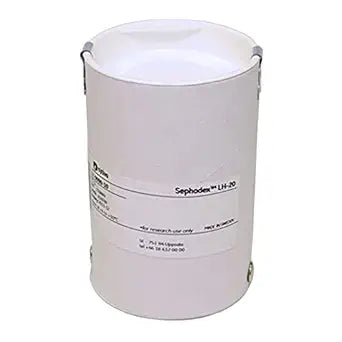
GE 17-0090-02 Cytiva Sephadex LH20 - Liquid Chromatography Media, 500g
A versatile hydroxypropylated dextran chromatography media for precise fractionation of lipids, hormones, vitamins, and small biomolecules.
Check availability
Affiliate Disclosure: As an Amazon Associate, Studio Supplies earns from qualifying purchases made through links on this page, at no additional cost to you. This helps support our editorial team.
Notice a mistake? Let Us Know
Overview
Key Features
Designed for use in polar organic solvents and aqueous solvent mixtures
Excellent for fractiotion of lipids, hormones, vitamins, and other small biomolecules
Useful for both alytical and industrial scales for the preparation of closely related molecular species
Sephadex LH-2 is made from hydroxypropylated dextran beads that have been crosslinked to yield a polysaccharide network
Powerful chromatographic selectivity due to dual hydrophilic and lipophilic ture of the matrix
Specifications
Product Name
Sephadex LH-20
Manufacturer
Cytiva (GE Healthcare Life Sciences)
Quantity
500g
Matrix
Hydroxypropylated dextran beads (crosslinked polysaccharide network)
Application
Liquid Chromatography
Separation Mechanism
Size exclusion, partition, and adsorption
Target Molecules
Lipids, hormones, vitamins, and other small biomolecules
Solvent Compatibility
Polar organic solvents and aqueous solvent mixtures
Scale
Analytical and industrial/preparative
Frequently Asked Questions
What types of molecules is Sephadex LH-20 best suited to separate?
It excels at fractionating small biomolecules including lipids, hormones, vitamins, steroids, and other closely related molecular species. Its dual hydrophilic-lipophilic character provides selectivity that standard gel filtration media cannot achieve.
What solvents are compatible with Sephadex LH-20?
It is designed for use with polar organic solvents (such as methanol, ethanol, and chloroform-methanol mixtures) as well as aqueous solvent mixtures, giving it broad flexibility across different separation protocols.
Can Sephadex LH-20 be used at both analytical and preparative scales?
Yes, it is suitable for both analytical-scale separations and industrial-scale preparative chromatography, making it useful across research, quality control, and production environments.
What is the bead matrix made of?
The beads are composed of hydroxypropylated dextran that has been crosslinked to form a polysaccharide network. The hydroxypropylation gives the matrix both hydrophilic and lipophilic properties, which is the basis for its unique chromatographic selectivity.
How much media is included in this package?
This package contains 500 grams of Sephadex LH-20 dry media.
Related Products


