

Price history
GE
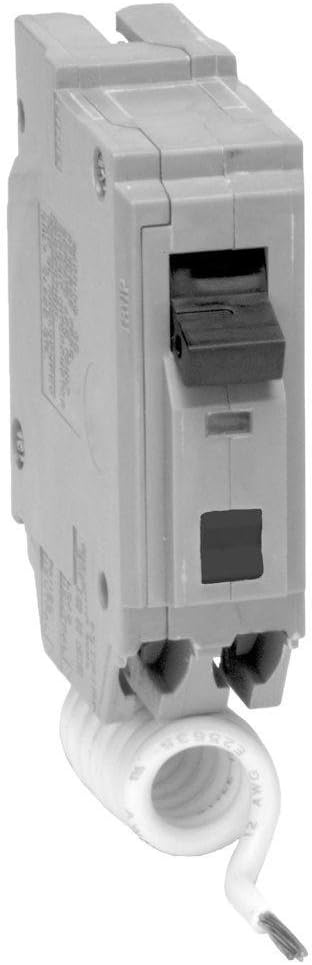
GE THQL1115AF2 15 Amp Plug-In Arc Fault Breaker
★★★★★
GE 15A plug-in AFCI breaker delivers advanced arc-fault protection for safer residential and commercial panels.
$45.00*$47.99Save 6%
View on Amazon
✓ In Stock on Amazon.com
*Price sourced from Amazon.com. Last updated:Jul 20, 2026.Price and availability are subject to change.
Affiliate Disclosure: Studio Supplies may earn a commission from qualifying purchases made through links on this page, at no additional cost to you. This helps support our editorial team.
Notice a mistake? Let Us Know
Overview
Key Features
Suitable for use on AL series panelboards in residential and commercial applications
Measures 1 Inch x 2-3/8 Inch x 3-9/32 Inch
Specifications
Brand
GE
Model
THQL1115AF2
Type
Combination Arc Fault Circuit Interrupter (AFCI)
Amperage
15 Amps
Voltage
120V AC
Poles
1
AIC Rating
10,000 Amps
Mounting Type
Plug-In Mount
Country of Origin
Dominican Republic
Frequently Asked Questions
What type of electrical panel is the GE THQL1115AF2 compatible with?
This breaker is designed for GE THQL-series load centers that accept plug-in mount breakers. It is not compatible with bolt-on panels or other manufacturer panels.
Does this breaker protect against both parallel and series arc faults?
Yes, as a combination-type AFCI, the THQL1115AF2 detects and interrupts both parallel arcs (line-to-neutral or line-to-ground) and series arcs (breaks within a single conductor).
What is the AIC rating on this breaker?
The breaker has a 10,000 AIC (Ampere Interrupting Capacity) rating, which is standard for residential applications.
Can this breaker be used as a standard circuit breaker replacement?
It can replace a standard single-pole 15A breaker in a compatible GE panel, but it adds AFCI protection. It is specifically an arc-fault circuit interrupter, not a standard thermal-magnetic-only breaker.
Does the THQL1115AF2 include GFCI protection?
No, this is an AFCI-only breaker. If you need both arc-fault and ground-fault protection, you would need a dual-function AFCI/GFCI breaker instead.
Related Products


