



Godox
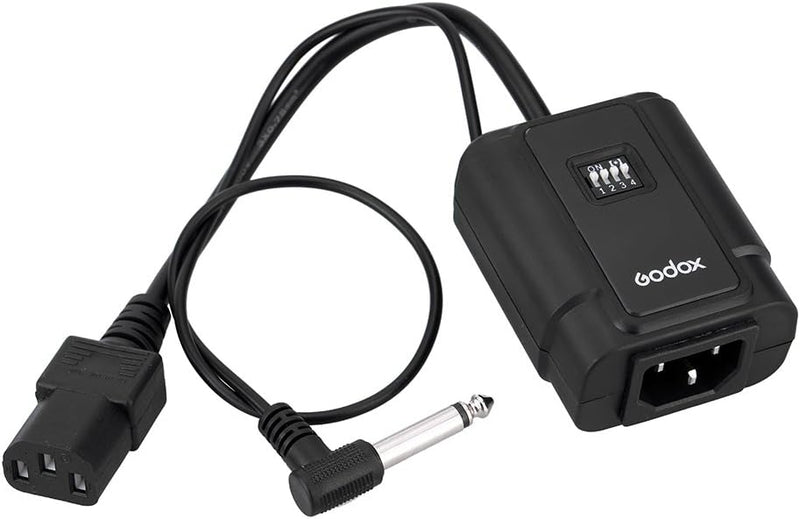
Godox 4332280005 DMR-16 Wireless Studio Flash Trigger Receiver
Bring consistent, channel-separated flash sync to your Godox DM-16 studio setup with a dedicated AC-powered receiver built for all-day strobe triggering.
$29.89*
View on Amazon
✓ In Stock on Amazon.com
*Price sourced from Amazon.com. Last updated:Aug 28, 2026.Price and availability are subject to change — details.
Affiliate Disclosure: As an Amazon Associate, Studio Supplies earns from qualifying purchases made through links on this page, at no additional cost to you. This helps support our editorial team.
Notice a mistake? Let Us Know
Overview
Key Features
Long distance, a full range of barrier free trigger flash strobes and rechargeable flashlight.
The receiver is used with alternating current.
It achieves quick response under the advanced MCU control.
It can meet the need of sync flash for any different shutter camera.
Suitable for Godox DM-16 flash trigger.
Specifications
Brand
Godox
Model
DMR-16
Compatible Transmitter
Godox DM-16
Channels
16
Power Source
Alternating Current (AC mains)
Sync Type
Manual (no TTL)
Control
MCU (Microcontroller Unit)
Camera Compatibility
Any camera shutter speed
Frequently Asked Questions
What trigger is the DMR-16 designed to work with?
The DMR-16 is designed exclusively for use with the Godox DM-16 wireless flash trigger. It is the matched receiver for that transmitter, and Godox does not list cross-compatibility with other trigger systems. If your transmitter is not a DM-16, this receiver will not be the right match.
Will the DMR-16 fire non-Godox studio flash units?
The DMR-16 connects to studio flash units via a standard sync port, so it can trigger any strobe with a compatible sync input — not just Godox units. The wireless communication is between the DM-16 transmitter and the DMR-16 receiver; the flash itself just needs a sync connection to the receiver's output port.
How does the 16-channel selection help on a busy set?
Each DMR-16 can be set to one of 16 channels, matching the channel selected on the DM-16 transmitter. In a multi-photographer environment — like a wedding with several shooters or a commercial set with a second unit — each team can operate on a dedicated channel so their trigger fires only their lights, not the adjacent setup.
Does the DMR-16 support TTL or high-speed sync?
Based on available specifications, the DMR-16 is a manual-sync receiver. It fires the attached flash when it receives a trigger signal from the DM-16 transmitter and does not pass through TTL exposure data. Flash power must be set manually at the strobe itself.
Why does the DMR-16 use AC power instead of batteries?
The DMR-16 is designed as a stationary studio receiver, powered by AC mains current. This eliminates battery depletion mid-session — a genuine problem with battery-powered receivers during long commercial shoots — but it also means the unit is not suitable for location work without a power source.
Related Products


