

Hal Leonard Corporation
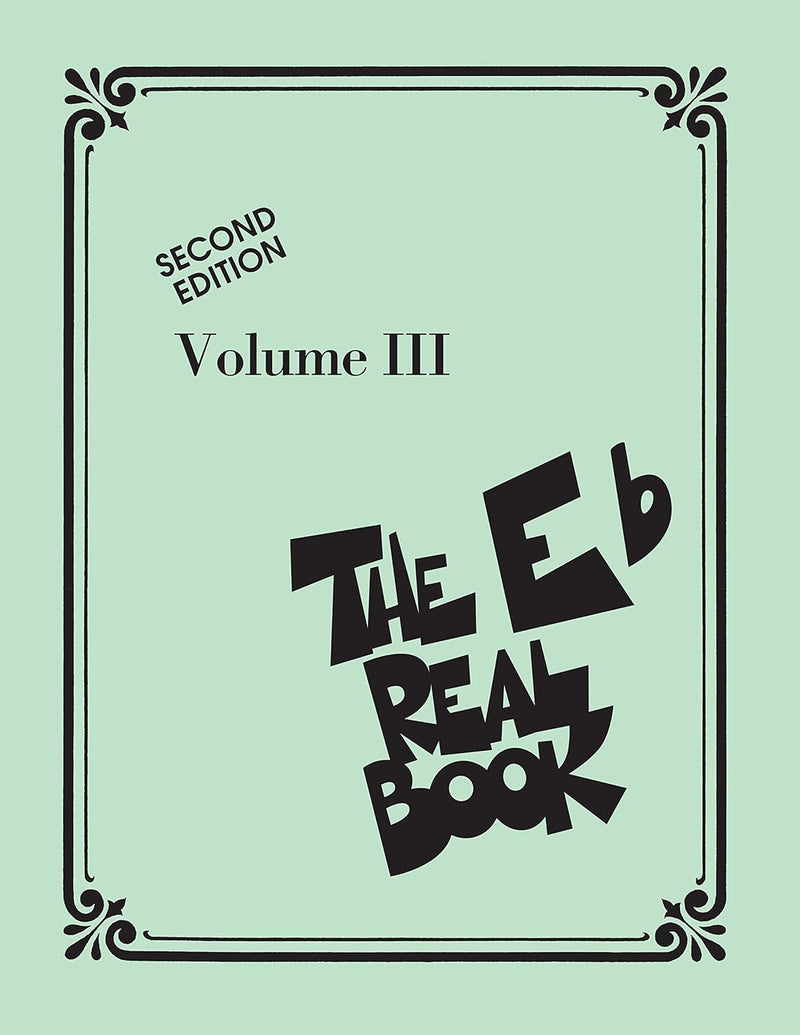
Hal Leonard Corporation Real Book - Volume III: Eb Edition
★★★★★
Four hundred jazz standards in Eb transposition — the Real Book Vol. III is the definitive on-the-bandstand reference for horn players and ensemble work.
$49.99*
View on Amazon
✓ In Stock on Amazon.com
*Price sourced from Amazon.com. Last updated:Jun 04, 2026.Price and availability are subject to change.
Affiliate Disclosure: Studio Supplies may earn a commission from qualifying purchases made through links on this page, at no additional cost to you. This helps support our editorial team.
Notice a mistake? Let Us Know
Overview
Specifications
Product
Real Book - Volume III: Eb Edition
Publisher
Hal Leonard Corporation
Edition
Eb
Volume
III
Pros & Cons
👍 Pros
- 400 tunes in a single volume covers deep-catalog jazz repertoire that goes well beyond what most single-volume fake books include.
- Eb transposition is print-correct for alto and bari sax players — eliminates real-time transposition and reduces reading errors under session pressure.
- Hal Leonard re-engraving corrects the chord symbol and melody errors present in earlier underground editions, making changes more reliable for rehearsal and performance.
- Pairs directly with Bb and C editions of the same volume, enabling consistent ensemble reading across transposing and concert-pitch instruments.
- Fake book format (melody, chord symbols, lyrics where applicable) is the industry-standard layout for jazz lead sheets — immediately familiar to any trained player.
👎 Cons
- 400 tunes means deep catalog cuts — players primarily working mainstream standards may find significant overlap with what they already know from Volumes I and II is absent here by design, requiring all three volumes for comprehensive coverage.
- Lead sheet format provides melody and changes only — no arrangement, no rhythm section notation, and no guidance on stylistic interpretation or feel.
- Physical book format has no search function, indexing is alphabetical only, and navigating to a specific tune mid-session requires page-flipping.
- No audio reference or QR-linked recordings — players must bring their own listening to understand how charts should be phrased and voiced.
- Eb-only edition means Bb players (tenor, trumpet, clarinet) need a separate volume — this book serves one transposition family exclusively.
Frequently Asked Questions
What does "Eb Edition" mean, and which instruments does it serve?
Eb transposition shifts every chart up a major sixth from concert pitch, so instruments that sound a major sixth lower than written — alto saxophone, baritone saxophone, and Eb clarinet — read at concert pitch without mental transposition. If you play alto sax, this is your edition.
How does Volume III differ from Volume I and II in its song selection?
Volume III covers a distinct repertoire of approximately 400 standards — tunes not duplicated in Volumes I and II. It extends the Real Book library into deeper catalog territory: less-frequently-charted hard bop, post-bop, and standards that serious players encounter in advanced sessions and recordings rather than casual jam settings.
Are the transcriptions in this edition accurate enough for professional session preparation?
The Hal Leonard Real Book series was re-engraved with corrected changes and melodies, addressing the well-documented accuracy issues of the original underground editions. While no lead sheet collection is a substitute for transcribing from recordings, the Vol. III Eb Edition is considered session-reliable by working professionals for lead melody and chord symbol reference.
Can this book be used alongside a Bb or C Real Book in an ensemble setting?
Yes — this is its primary ensemble function. When a pianist uses the C Edition and a tenor player uses the Bb Edition, the alto player reads from this Eb Edition; all three are reading the same chart in their respective transpositions, producing concert-pitch unison on melody and identical harmonic content.
Is this book suitable for students or is it primarily a professional reference?
Both. It serves as an advanced study resource for students working through repertoire beyond introductory jazz curricula, and as a working reference for professionals who encounter these less-common standards on gigs or recording dates. The layout assumes you can read standard notation and interpret chord symbols.
Related Products


