



Hoya
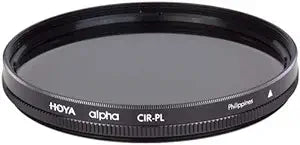
Hoya ALP49CRPL 49mm Alpha Circular Polarizer Filter
Richer skies, cleaner reflections, and truer color — the Hoya Alpha 49mm CPL gives outdoor photographers an essential optical tool without the premium price.
$17.23*
Check availability
*Price sourced from Amazon.com. Last updated:Aug 30, 2026.Price and availability are subject to change — details.
Affiliate Disclosure: As an Amazon Associate, Studio Supplies earns from qualifying purchases made through links on this page, at no additional cost to you. This helps support our editorial team.
Notice a mistake? Let Us Know
Overview
Key Features
Great optical quality at an affordable price.
Precision milled aluminum frame.
Cir-PL is non-coated glass
These new HOYA series plus the EVO filters are manufactured by HOYA exclusively for distribution in the United States of America.
Specifications
Brand
Hoya
Model Number
ALP49CRPL
Filter Type
Circular Polarizer (Cir-PL)
Filter Diameter
49mm
Frame Material
Precision milled aluminum
Glass Coating
Non-coated
Distribution Region
United States of America
Frequently Asked Questions
Will the circular polarizer design preserve autofocus accuracy on my mirrorless or DSLR body?
Circular polarizers are built to maintain full compatibility with phase-detection and contrast-detection AF systems. Unlike linear polarizers, the circular design doesn't interfere with the beamsplitter used in modern autofocus — you can leave AF running normally while the filter is on the lens.
How noticeable is the exposure compensation needed when shooting with this filter?
Expect a reduction of roughly 1.5 to 2 stops of light transmission through the polarizer. Your camera's through-the-lens metering will adjust automatically, but in lower light — golden hour, open shade — that exposure hit can push shutter speed low enough to introduce camera shake on handheld shots. Factor it into your settings when light is marginal.
The filter is non-coated — how does that affect performance shooting near windows or water?
Non-coated glass cuts glare and reflection effectively in standard front-lit and cross-lit outdoor conditions, which is where polarizers earn their keep. In high-contrast scenes with bright light sources at extreme angles, non-coated glass is more prone to internal reflections and ghosting than multi-coated alternatives. For water and window reflection control in typical shooting conditions, performance is solid.
How do I achieve maximum polarization effect when shooting landscapes?
Rotate the outer ring of the filter while watching the scene in your viewfinder or on the live view screen — the effect is visible in real time. The strongest polarization occurs when the sun is roughly 90 degrees to your shooting direction. Shooting directly toward or away from the sun yields minimal polarization effect regardless of filter rotation.
Is this filter stackable with other filters, such as a UV or ND?
The standard aluminum frame is not a slim or thin version, so stacking this filter with another on wide-angle lenses increases the risk of vignetting, particularly at focal lengths below 24mm equivalent. On standard and telephoto focal lengths, stacking is technically possible but every additional layer of glass introduces potential for added flare, especially with non-coated glass in the stack.
Related Products


