



Hoya
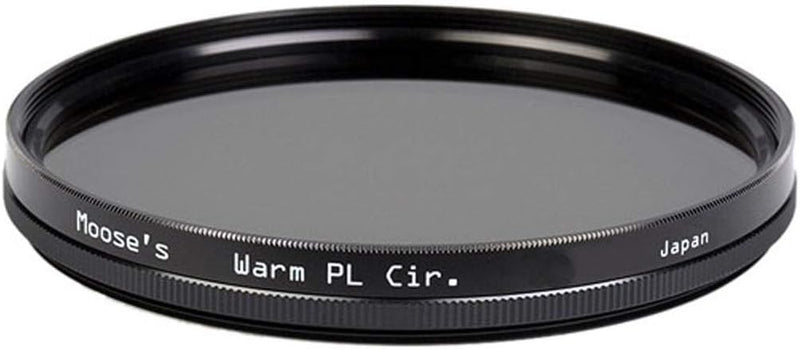
Hoya 77mm Moose Peterson Warming Polarizer
One filter, two effects: the Hoya Moose Peterson combines a rotating polarizer with built-in 81A warming to deepen skies and add golden warmth in a single 77mm element.
View price on Amazon
Affiliate Disclosure: As an Amazon Associate, Studio Supplies earns from qualifying purchases made through links on this page, at no additional cost to you. This helps support our editorial team.
Notice a mistake? Let Us Know
Overview
Key Features
81A warming filter
Specifications
Brand
Hoya
Model
B77CIRPLWGB
Filter Size
77mm
Filter Type
Circular Polarizer with 81A Warming
Warming Element
81A (fixed)
Material
Glass
Coating
Multi-coating
Effect Type
Color correcting + polarizing
Water Resistance
Not water resistant
Frequently Asked Questions
What does combining a polarizer with an 81A warming filter actually do to my images in practice?
The polarizer rotates to cut reflections and deepen blue skies, while the 81A warming layer simultaneously shifts the entire image slightly toward amber. In golden-hour or overcast outdoor shots, you get richer, more saturated results without the cool flatness that a standard CPL can produce on its own.
Can I control the warming effect independently of the polarization?
No. The 81A warming is a fixed element in the glass — you rotate the outer ring to adjust polarization intensity, but the warming shift is always present at a fixed level. If you need neutral polarization, a standard Hoya CPL is the better tool.
Does the warming cast make white balance correction in post difficult?
The 81A shift is subtle enough that it's manageable in post if needed, but it does set a baseline color temperature the camera's auto white balance may partially correct. Shooting RAW gives you full control to keep, reduce, or remove the warmth during processing.
How does this filter compare to stacking a standard CPL with a separate 81A warming filter?
The single-filter approach eliminates one additional glass element from your stack, which reduces the risk of vignetting, inter-element reflections, and front-element rotation conflicts. It's also faster to deploy in the field than managing two separate filter rings. The trade-off is the fixed coupling — you can't use one effect without the other.
Is the 77mm thread size compatible with common telephoto and wide-angle lenses?
77mm is one of the most common filter threads in professional lens lineups — it fits a wide range of telephoto zooms, fast standard zooms, and many primes. However, verify your specific lens's filter thread before purchasing; ultra-wide lenses below 16mm sometimes use larger or non-standard thread sizes.
Related Products


