



Hoya
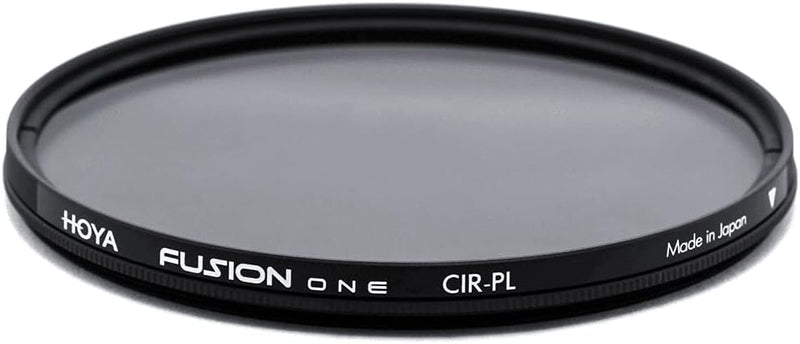
Hoya HFOPL058 58mm Fusion ONE PL-CIR Camera Filter
Cut glare and punch up color saturation for landscapes, water, and glass with Hoya's 18-layer coated 58mm circular polarizer.
$49.90*
Check availability
*Price sourced from Amazon.com. Last updated:Aug 30, 2026.Price and availability are subject to change — details.
Affiliate Disclosure: As an Amazon Associate, Studio Supplies earns from qualifying purchases made through links on this page, at no additional cost to you. This helps support our editorial team.
Notice a mistake? Let Us Know
Overview
Key Features
reduces reflections from non-metallic surfaces, increases contrast and colour saturation
hoya professional-grade optical glass
18 layers of super hmc multi-coating for high light-transmission and resistance to flare
stain resistant to protect against finger prints and smudges
water repellent - easy to keep clean.Mounting type: Thread
Specifications
Brand
Hoya
Model
HFOPL058
Filter Size
58mm
Filter Type
Circular Polarizer (PL-CIR)
Glass
Hoya Professional-Grade Optical Glass
Coating
18-Layer Super HMC Multi-Coating
Surface Treatment
Stain Resistant, Water Repellent
Mounting Type
Thread (Screw-In)
Frequently Asked Questions
How do I know when this filter is having the maximum effect while shooting?
Rotate the front ring while looking through the viewfinder or at your live view screen — you'll see reflections on water or glass fade and sky contrast shift as you turn. Maximum polarization effect occurs at roughly 90 degrees to the light source. You'll see a clear visual difference in the finder; there's no guesswork.
Does the Fusion ONE coating affect how much light reaches the sensor?
Any circular polarizer reduces light transmission — typically by 1.5 to 2 stops. The 18-layer Super HMC multi-coating on the Fusion ONE maximizes the light that does pass through by minimizing internal reflections and flare from the filter glass itself. The coating doesn't eliminate the exposure compensation inherent to polarization physics, but it ensures the filter isn't adding unnecessary light loss beyond that baseline.
Will this filter cause vignetting on wide-angle lenses?
The 58mm thread fits a specific set of lenses, and the filter's frame profile is relevant — Hoya's Fusion ONE uses a slim profile design that reduces vignetting risk compared to standard-depth filter frames. On very wide lenses (below 24mm equivalent), corner shading is still possible depending on the lens barrel geometry, so testing at your widest focal length is advisable.
How does the stain-resistant and water-repellent coating work in the field?
The outer coating causes water to bead and roll off the filter surface rather than spreading into a smear, and the stain-resistant layer resists fingerprint oils from adhering to the glass. This means a quick brush with a microfiber cloth restores the surface without requiring cleaning fluid — a practical advantage during a long outdoor shoot.
Is this filter compatible with a lens hood?
The rotating front ring on a circular polarizer typically sits proud of a standard lens hood mount. In most cases, you'll need to remove a screw-in lens hood to use a rotating polarizer, or use a bayonet-style hood that mounts behind the filter ring.
Related Products


