

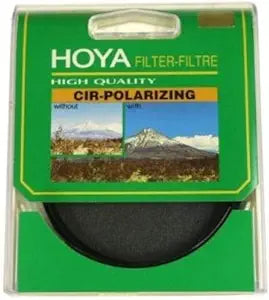
Hoya
Hoya HOY 46 CIRC POLARIZING 46mm Circular Polarizer Filter
Cut reflections and deepen color saturation on your 46mm lens with Hoya's precision circular polarizer.
Check availability
Affiliate Disclosure: As an Amazon Associate, Studio Supplies earns from qualifying purchases made through links on this page, at no additional cost to you. This helps support our editorial team.
Notice a mistake? Let Us Know
Overview
Key Features
Designed to adjust brightly reflected light especially sunlight (reflected off of water or snow) and reduce unwanted glare
Creates dramatic sky/cloud contrast and saturates colours without changing colour balance
Mount rotates to control amount of effect
Coatings applied to both surfaces to suppress reflection and increase light transmission
For use with autofocus cameras and lenses
Specifications
Brand
Hoya
Model
HOY 46 CIRC POLARIZING
Filter Size
46mm
Filter Type
Circular Polarizing
Mount Type
Screw-in
Coating
Dual-surface coated
Compatibility
Autofocus cameras and lenses
Frequently Asked Questions
Is this the same filter as the Hoya B00009R95M 46mm circular polarizer?
Both are Hoya 46mm circular polarizers, but they carry different ASIN/model identifiers, which may reflect different production runs, packaging, or regional distribution. The optical specifications and function are the same.
Can I leave this circular polarizer on my lens permanently as a protective filter?
While it will physically protect your front element, a circular polarizer reduces light transmission by about 1-2 stops and can affect exposure in low-light situations. It is best used intentionally when you want its glare-reducing and color-enhancing effects, rather than as a permanent lens protector.
Does the polarizing effect work on all types of reflections?
Circular polarizers are effective on reflections from non-metallic surfaces such as water, glass, and foliage. They have little to no effect on reflections from bare metal surfaces.
Will this filter cause vignetting on wide-angle lenses?
On very wide-angle lenses (roughly 24mm equivalent or wider), the filter's ring thickness can introduce vignetting in the corners of the frame. At standard and telephoto focal lengths, vignetting is not an issue.
How do I clean this filter without damaging the coatings?
Use a microfiber cloth or lens cleaning tissue with a small amount of lens cleaning solution. Avoid pressing hard or using abrasive materials, as this can wear down the anti-reflection coatings over time.
Related Products


