



Hoya
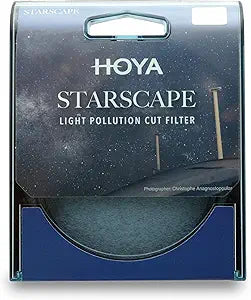
Hoya Hoya 49mm Starscape Light-Pollution Filter
Reclaim the Milky Way from sodium-lit skies with a filter built to cut the orange glow before it reaches your sensor.
$41.19*
View on Amazon
✓ In Stock on Amazon.com
*Price sourced from Amazon.com. Last updated:Aug 29, 2026.Price and availability are subject to change — details.
Affiliate Disclosure: As an Amazon Associate, Studio Supplies earns from qualifying purchases made through links on this page, at no additional cost to you. This helps support our editorial team.
Notice a mistake? Let Us Know
Overview
Key Features
Reduces yellowish and greenish colour cast from street lights
Natural colour reproduction and improved overall contrast
Compatible with wide and super-wide angle lenses
Low profile frame
Specifications
Model
Hoya Starscape 49mm
Filter Type
Light Pollution Reduction
Thread Size
49mm
Glass Type
Special optical glass
Frame Design
Low profile
Primary Effect
Reduces yellow and greenish light pollution cast
Lens Compatibility
Wide and super-wide angle lenses
Ideal Use
Astrophotography, night landscape photography
Frequently Asked Questions
What specific light sources does the Hoya Starscape filter target, and how does it work?
The Starscape uses special optical glass formulated to absorb the yellow-orange wavelengths produced by sodium vapor streetlights and the greenish cast from mercury vapor and some LED sources. It selectively cuts those narrow emission bands while passing the broader spectrum of natural starlight and moonlight, improving contrast and restoring more neutral color to the night sky.
Will the Starscape filter reduce my exposure or require longer shutter times?
Yes — any filter absorbs some light, and the Starscape is no exception. Expect a modest increase in required exposure time or ISO compared to shooting unfiltered. The exact impact depends on how much of the cut wavelengths were present in your scene; in areas with heavy sodium lighting, you may actually find you can use a lower ISO because the filter is reducing the dominant noise-causing light pollution rather than just adding an overall stop.
Is the 49mm low-profile frame compatible with wide and ultra-wide angle lenses without vignetting?
Hoya specifically designed the Starscape's frame to be low-profile to minimize vignetting risk on wide and super-wide lenses. However, vignetting depends on your specific lens design — stacking this filter on top of another filter at 49mm on a very wide prime may still produce corner darkening.
Does this filter help with all types of light pollution, including modern LED streetlights?
It addresses the yellow and greenish casts from sodium and mercury vapor sources most effectively. Modern white LED streetlights are more spectrally broad, so the improvement in LED-heavy urban skies is less dramatic than in areas still dominated by older sodium vapor infrastructure. It still helps, but results vary by location.
Can the Starscape be used for daytime photography as well?
Technically it can be mounted during the day, but it's purpose-built for night use. Daytime images will show an unnatural color cast since the filter is selectively blocking wavelengths that are balanced differently in daylight. Keep it for astrophotography and night landscape sessions.
Related Products


