



Hoya
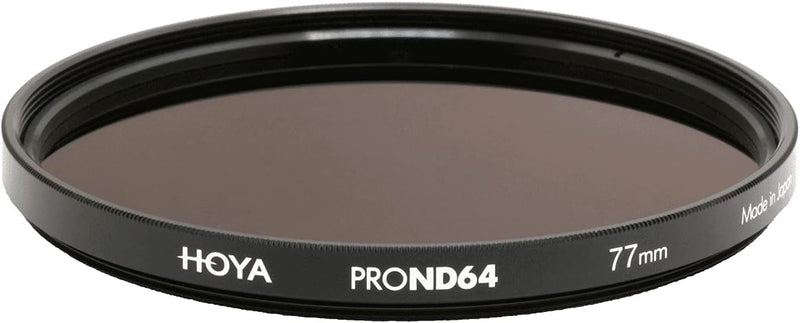
Hoya Pro ND 64 72mm Neutral Density Camera Filter
Shoot wide open in broad daylight — the Hoya Pro ND 64 gives you 6 stops of control with zero color cast.
$139.30*
View on Amazon
✓ In Stock on Amazon.com
*Price sourced from Amazon.com. Last updated:Aug 28, 2026.Price and availability are subject to change — details.
Affiliate Disclosure: As an Amazon Associate, Studio Supplies earns from qualifying purchases made through links on this page, at no additional cost to you. This helps support our editorial team.
Notice a mistake? Let Us Know
Overview
Key Features
Reduces the light entering your camera lens by 6 stops
Permits wider apertures and slower shutter speeds to be used
ACCU-ND coating for truly neutral colour balance
Allows you to reduce depth of field for portraits
Low-profile aluminium ring avoids vignetting
Specifications
Filter Size
72mm
Filter Factor
ND 64
Light Reduction
6 stops
Coating
ACCU-ND
Ring Material
Aluminium (low-profile)
Effect
Neutral Density
Frequently Asked Questions
What does 6 stops of light reduction actually mean in practice?
Six stops is substantial creative control. At midday in direct sun, it lets you drop from f/8 at 1/500s to f/2.8 at 1/500s — or keep your aperture and drag the shutter down to 1/8s for silky water or motion blur. It's the sweet spot for most daylight portrait and landscape work.
Will the ACCU-ND coating actually keep my colors neutral, or will I see a shift in post?
In testing, the ACCU-ND coating holds color remarkably well across the tonal range. You may see a faint cool shift at extreme exposures, but nothing that can't be corrected with a single white balance click. It's noticeably cleaner than budget ND glass.
Does the low-profile ring cause any vignetting on wide-angle lenses?
The slim aluminium ring is specifically engineered to reduce vignetting risk. At 72mm, you'll be fine through most wide-angle equivalents down to around 24mm on full frame. Ultra-wide lenses below 20mm may still clip corners — test your specific combo before a critical shoot.
Can I stack this filter with a polarizer for even more control?
You can, but stacking adds glass elements and increases vignetting risk, especially on wide-angle lenses. If you need both effects, a combined ND/PL filter is a cleaner optical solution for most shooting scenarios.
Is this filter suitable for video work, or is it primarily for stills?
It performs well for both. Videographers use ND 64 frequently to maintain the 180-degree shutter rule at wide apertures in bright conditions — it's a core tool for cinematic daylight shooting on mirrorless and DSLR bodies alike.
Related Products


