

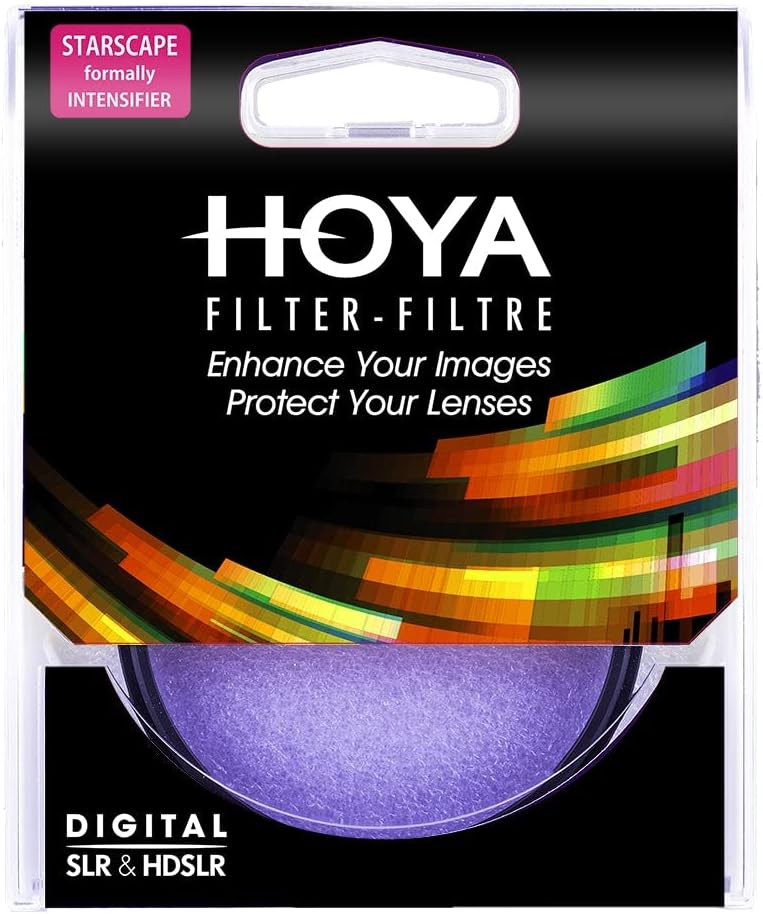


Hoya
Hoya RA54 Red Enhancer 82mm Filter Starscape
Cut through light pollution and reveal stunning night skies with this 82mm didymium glass astrophotography filter.
View price on Amazon
Affiliate Disclosure: As an Amazon Associate, Studio Supplies earns from qualifying purchases made through links on this page, at no additional cost to you. This helps support our editorial team.
Notice a mistake? Let Us Know
Overview
Key Features
BLOCKS LIGHT POLLUTION FOR CRISP, CLEAN NIGHT SHOTS – The Starscape 82 mm lens filter cuts unwanted yellow-orange wavelengths from sodium and mercury vapor lights, reducing skyglow and improving star visibility in night and astro photo setups.
ENHANCES NIGHT SKIES WITH RICH COLOR AND CONTRAST – This specialized Didymium glass camera lens filter naturally separates stars from the sky, boosting celestial detail and preserving the true color of landscapes in long exposures or wide-angle astrophotography.
SPECIALIZED DIDYMIUM GLASS WITH MULTI-COATED CLARITY – Built with ’s advanced Didymium glass and multi-layer coating, this camera filter delivers 97%+ light transmission, reducing reflections and flare for clean, high-contrast night imagery.
SLIM, LIGHTWEIGHT FRAME DESIGNED FOR WIDE LENSES – Crafted with a low-profile black aluminum ring, this screw-in filter fits securely on 82mm camera lenses and won’t cause vignetting—even when paired with ultra-wide lenses or stacked with other filters.
IDEAL FOR ASTROPHOTOGRAPHY, URBAN NIGHTS, AND TIME-LAPSE – Whether capturing the Milky Way, aurora, or night cityscapes, this Starscape 82mm filter cuts editing time and enhances in-camera clarity—perfect for DSLR shooters and night photo enthusiasts.
Specifications
Brand
Hoya
Model
RA54 Red Enhancer
Filter Size
82mm
Filter Type
Enhancing (Didymium Glass)
Filter Factor
1.4 (0.5 stop)
Density
0.15
Coating
Multi-layer coated
Light Transmission
97%+
Frame Material
Black aluminum, low-profile
Frequently Asked Questions
How does the Hoya Starscape filter reduce light pollution?
The didymium glass selectively blocks the yellow-orange wavelengths emitted by sodium and mercury vapor streetlights, reducing skyglow while allowing the rest of the visible spectrum to pass through for natural-looking night images.
Does this filter cause vignetting on wide-angle lenses?
No. The slim, low-profile aluminum frame is specifically designed to avoid vignetting, even on ultra-wide-angle lenses or when stacked with another filter.
How much light does the Hoya RA54 filter absorb?
The filter has a filter factor of 1.4, which equals approximately a 0.5-stop light loss. This is a modest reduction that is easy to compensate for with a slightly longer exposure.
Can I use this filter for daytime landscape photography?
Yes. The RA54 Red Enhancer intensifies red, orange, and brown tones, making it useful for autumn foliage, sunset, and architectural photography in addition to nighttime use.
Is the filter multi-coated?
Yes. Hoya applies a multi-layer coating to the didymium glass, which delivers over 97% light transmission while reducing reflections and lens flare.
Related Products


