

Hoya
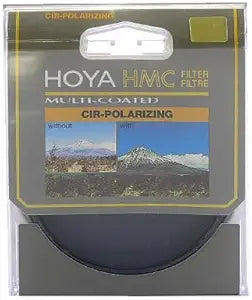
Hoya Y5POLC058 58mm Circular Polarizer Filter
Deep blue skies, cut reflections, and saturated color straight from the camera — Hoya's 58mm circular polarizer delivers precise polarization control for landscape and outdoor portrait work.
$49.95*
Check availability
*Price sourced from Amazon.com. Last updated:Aug 30, 2026.Price and availability are subject to change — details.
Affiliate Disclosure: As an Amazon Associate, Studio Supplies earns from qualifying purchases made through links on this page, at no additional cost to you. This helps support our editorial team.
Notice a mistake? Let Us Know
Overview
Key Features
Creates dramatic sky/cloud contrast.
Saturates colors without changing color balance.
Mount rotates to control amount of effect.
Super Multi Coated for maximum flare protection.
Specifications
Filter Diameter
58mm
Filter Type
Circular Polarizer
Coating
Super Multi Coated
Light Transmission
Over 97%
Frequently Asked Questions
Why does this need to be a circular polarizer rather than a linear one?
A circular polarizer is required for cameras with phase-detection autofocus — the second optical element in a CPL prevents the AF system from misreading polarized light. Linear polarizers can confuse modern phase-detect AF mechanisms, so always use a CPL on any current DSLR or mirrorless body.
How do I control the polarization effect once the filter is mounted?
The outer ring rotates freely after mounting. Rotate it while watching through the viewfinder or live view — at roughly 90 degrees to the light source, you'll see maximum effect: deepest blue sky, strongest reflection elimination. The ring angle controls intensity continuously.
Does this filter introduce any color cast?
No — the Hoya CPL saturates colors by physically eliminating scattered polarized light rather than adding filtration. Skin tones, foliage, and neutral surfaces render correctly without a warming or cooling shift.
How much exposure compensation does this filter require?
Despite transmitting over 97% of light, polarizers absorb 1.5–2 stops total — expect to open aperture, slow shutter speed, or raise ISO when the filter is mounted. The Super Multi Coating keeps that penalty as low as the physics of polarization allows.
Can I stack this filter with an ND or UV filter?
Stacking is possible, but added filter thickness may cause vignetting on ultra-wide lenses. The Super Multi Coating minimizes inter-element flare when stacking, but test for corner shading at your widest focal length before committing to stacked use.
Related Products


