



Hoya
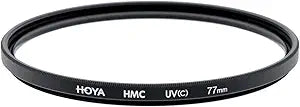
Hoya Y5UV058 58mm UV(C) HMC Slim Lens Filter
★★★★★
Always-on lens protection with 12-layer multi-coating and a 5mm slim profile — clean glass, clean corners, no vignetting on wide-angle lenses.
$12.95*
Check availability
*Price sourced from Amazon.com. Last updated:Jul 14, 2026.Price and availability are subject to change.
Affiliate Disclosure: Studio Supplies may earn a commission from qualifying purchases made through links on this page, at no additional cost to you. This helps support our editorial team.
Notice a mistake? Let Us Know
Overview
Key Features
UV filter absorbs ultraviolet rays which often make outdoor photographs hazy and indistinct
Multi-purpose fine-weather filter for colour as well as black and white films
12 layers of Super Multicoating produces an average transmission of 99.7%
Slim profile of just 5 mm avoids vignetting problems, making it ideal for use with wide angle lens
Also serves as a permanent lens protector.To fit 58 mm thread size
Specifications
Filter Type
UV(C) HMC Slim Lens Filter
Filter Size
58mm
Coating
12 layers of Super Multicoating
Transmission Rate
99.7% (average)
Profile
Slim (5 mm)
Primary Function
Absorbs ultraviolet rays, Permanent lens protector
Secondary Function
Fine-weather filter for color and black & white films
Pros & Cons
👍 Pros
- The 5mm slim profile clears vignetting on wide-angle lenses where standard-frame UV filters cause corner darkening at maximum aperture — a meaningful practical advantage for wide-angle shooters that thicker filters at 58mm cannot match
- Twelve layers of super multi-coating achieve 99.7% average light transmission, adding virtually no measurable light loss to exposures — the filter is effectively optically invisible in normal shooting conditions
- Absorbs UV radiation that causes outdoor images to appear hazy or low-contrast in high-UV environments such as high altitude, near water, and snow — supplementing the sensor's own UV cut in conditions where atmospheric UV is elevated
- Works as a permanent front-element protector against dust, moisture spray, and accidental contact, allowing the filter to stay mounted across a full day of shooting without removal
- 58mm thread size covers a wide range of mid-range zoom and prime lenses across Canon, Nikon, Sony, and Fujifilm systems, making this filter transferable across a kit of compatible lenses
👎 Cons
- The slim frame has no front filter thread, making filter stacking — a polarizer or ND on top of the UV — impossible with this filter in place; the UV must be removed before adding a second filter
- Even 12-layer multi-coating can introduce very subtle flare or ghosting when strong light sources are positioned directly within or near the frame edge — an inherent consequence of any additional glass element in the optical path
- The UV absorption benefit is largely redundant for digital camera systems whose sensor stacks already include UV cut glass — the value for digital shooters is front-element protection, not optical UV correction
- The slim frame profile reduces the gripping surface available when threading the filter on and off in cold conditions or with wet or gloved hands
- HMC coating is hardened but not impervious — cleaning with abrasive materials or wiping while grit is on the surface introduces micro-scratches to the coating that accumulate into visible degradation over time
Frequently Asked Questions
Why use a UV filter on a digital camera when the sensor already has built-in UV cut glass?
The optical UV filtering benefit is largely supplemental on digital bodies, which do have internal UV cut elements at the sensor stack. The primary reason to mount the Hoya UV(C) HMC on a digital system is front-element protection — the filter shields the lens against dust, moisture, and accidental impact, saving the cost of lens repair or replacement if the front element is struck or scratched.
Does the 5mm slim profile actually eliminate vignetting on wide-angle lenses?
That is the specific problem the slim design solves. Standard-depth filter frames at 58mm can intrude on the image circle of wide-angle lenses, causing corner darkening at wide apertures. The Hoya slim's 5mm depth clears this on most wide-angle lenses, making it a safe permanent filter choice for wide primes and zoom lenses at 58mm thread size.
Does the HMC multi-coating affect color neutrality or add any visible color cast?
No. Hoya's multi-coating achieves 99.7% average light transmission across the visible spectrum — at that level, any color shift introduced by the filter is not practically visible in photographic output. It is designed to be optically neutral.
Can I stack a circular polarizer or ND filter on top of this UV filter?
No. The slim frame design eliminates the front filter thread to achieve the 5mm depth profile. To stack additional filters, remove the UV filter first and thread the polarizer or ND directly onto the lens.
What is the correct way to clean the HMC coating without damaging it?
Use a clean microfiber cloth and proper lens cleaning fluid. Never wipe the surface while dust or grit is present — abrasive particles dragged across the coating leave micro-scratches that accumulate over time. First blow off loose particles with a bulb blower, then clean gently with the microfiber.
Related Products


