

Hoya
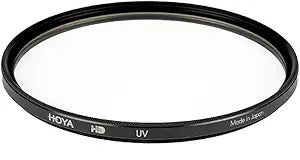
Hoya YHDUV046 HD Super Multi-Coated 46mm UV Filter
Keep your 46mm glass clean and sharp in the field — the Hoya HD UV filter's hardened optics protect without compromise.
$28.90*
Check availability
*Price sourced from Amazon.com. Last updated:Aug 28, 2026.Price and availability are subject to change — details.
Affiliate Disclosure: As an Amazon Associate, Studio Supplies earns from qualifying purchases made through links on this page, at no additional cost to you. This helps support our editorial team.
Notice a mistake? Let Us Know
Overview
Key Features
High Density Sharp Cut UV Glass
8-layer Anti-Reflective Multi-Coating
Glass Mounted with High Pressure Press Technology
Specifications
Filter Size
46mm
Glass Type
High Density Sharp Cut UV Glass
Coating
8-Layer Anti-Reflective Multi-Coating
Frame
Ultra-Thin Wide-Angle Compatible
Mounting
High Pressure Press Technology
Surface Treatment
Water & Oil Repellent, Scratch & Stain Resistant
Filter Effect
UV — Ultraviolet Absorption
Frequently Asked Questions
Is the 46mm thin frame truly wide-angle safe, or will I see vignetting on fast primes?
The ultra-thin frame is designed for wide-angle use at 46mm. On typical compact primes and kit lenses using this thread size, vignetting is not a concern — the frame stays out of the image circle at standard and wide focal lengths.
How does the 8-layer multi-coating perform on lenses used in bright or mixed-light conditions?
The 8 anti-reflective layers significantly reduce internal reflections that cause flare and ghost artifacts when your light source enters the frame at an angle. Compared to uncoated or minimally coated UV filters, the performance difference is clearest in backlit and window-lit scenarios.
Will this filter affect autofocus or in-camera image stabilization?
No — the filter sits passively in front of the optical path and has no interaction with the lens's AF motor or stabilizer system. The neutral UV(0) transmission does not affect metering or sensor calibration either.
How should I clean the filter without damaging the coating?
The HD glass includes water and oil repellent treatment, so dust and smudges are easier to lift cleanly. Use a lens pen or microfiber cloth with a drop of lens cleaning fluid — circular motions with light pressure. Avoid paper products, which can micro-scratch the coating surface.
Can I stack this filter with a polarizer or ND filter?
The ultra-thin frame makes stacking less prone to vignetting than standard frames, but stacking any two filters at 46mm increases the risk of corner shading, especially at focal lengths wider than 24mm equivalent. For most situations, use the filter independently.
Related Products


