



Hoya
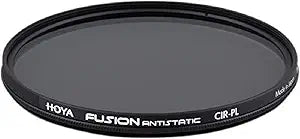
Hoya YSCPL043 43mm Fusion Antistatic Circular Polarizing Filter
★★★★★
Cut surface glare and pull richer skies out of the scene — without spending a session cleaning dust off your glass.
$40.90*
Check availability
*Price sourced from Amazon.com. Last updated:Jul 14, 2026.Price and availability are subject to change.
Affiliate Disclosure: Studio Supplies may earn a commission from qualifying purchases made through links on this page, at no additional cost to you. This helps support our editorial team.
Notice a mistake? Let Us Know
Overview
Key Features
NEW Antistatic coating repels dust
Scratch resistant - Hardened coating protects against everyday wear
Stain resistant - Protects against exposure to ink, markers etc.
Water repellent - Water beads up and wipes away easily
Fingerprints and smudges wipe away cleanly
Specifications
Filter Type
Circular Polarizing Filter
Filter Size
43mm
Coating
Antistatic, Hardened, Stain resistant, Water repellent
Brand
Hoya
Pros & Cons
👍 Pros
- The antistatic coating keeps particle accumulation noticeably lower during outdoor landscape and street sessions, reducing how often you need to stop and clean the glass between shots.
- Water-repellent surface lets you wipe off spray, condensation, or light rain quickly in the field without leaving streaks — useful during coastal or waterfall shooting where moisture is constant.
- Nine-layer Super Multi-coating preserves color accuracy when cutting reflections off water or glass, so the polarized image holds the same tonal balance as unfiltered frames in the same scene.
- The scratch-resistant hardened coating holds up to daily use inside a filter wallet without the surface degradation that shows up on softer-coated CPLs after a season of shooting.
- Low-profile aluminum frame keeps the filter slim enough to avoid vignetting on the compact primes that typically carry a 43mm thread.
👎 Cons
- The 43mm filter size limits this to a narrow range of compact prime lenses — you can't step it up to cover larger front elements without a separate step-up ring.
- Like all polarizers, this filter costs approximately one to two stops of light, which limits its practical use in low-light or heavily overcast conditions where exposure latitude is already tight.
- The very low-profile frame, while great for vignetting, can be difficult to grip and rotate smoothly when wearing gloves or working in cold conditions.
- At 43mm there are fewer third-party filter system adapters available compared to larger common sizes, limiting integration into modular filter holder setups.
Frequently Asked Questions
What does the antistatic coating actually do differently from a standard CPL?
The antistatic coating on this filter actively repels dust rather than just allowing you to wipe it off. On a full shooting day outdoors — especially in dry, dusty environments or near water — you'll notice significantly less particle accumulation on the glass surface compared to an uncoated CPL.
How much light does the Fusion CIR-PL cut, and when does that become a problem?
A circular polarizer typically costs you between one and two stops of light. In bright outdoor conditions that's negligible, but during overcast landscape sessions or shooting into shaded canopy, the light loss can push you toward slower shutter speeds — worth keeping in mind when handholding at the long end of a zoom.
Will the low-profile frame cause vignetting on wide-angle lenses?
The two-piece, very low-profile aluminum frame is specifically designed to minimize vignetting risk. On most standard primes and moderate wide-angle lenses in the 43mm filter thread range, vignetting is not an issue — though extreme wide angles may show corner darkening depending on the specific lens geometry.
How does the 9-layer multi-coating affect color neutrality?
The multi-coating on this filter is engineered to minimize color cast, so skies and foliage render without the warm or green shift that cheaper CPL filters can introduce. In practice, colors remain clean and consistent — which means less correction work in post when comparing frames with and without the filter.
Can I stack this with an ND filter?
The low-profile frame design reduces the front filter thread accessibility common on standard-frame CPLs. While stacking is physically possible with compatible screw-in NDs, the low-profile build is optimized for single-filter use — stacking increases vignetting risk and can introduce reflections between elements.
Related Products


