



Hoya
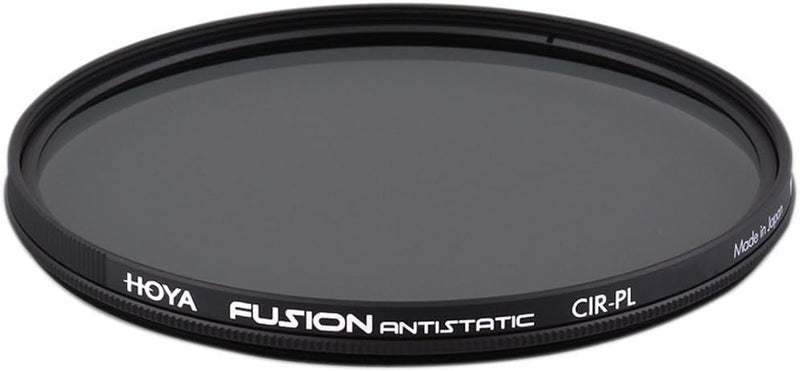
Hoya YSCPL046 46mm Fusion Antistatic CIR-PL Filter
Hoya's antistatic coating keeps this 46mm circular polarizer cleaner between shots, so you spend more time shooting skies and water and less time cleaning glass.
$44.90*
Check availability
*Price sourced from Amazon.com. Last updated:Aug 31, 2026.Price and availability are subject to change — details.
Affiliate Disclosure: As an Amazon Associate, Studio Supplies earns from qualifying purchases made through links on this page, at no additional cost to you. This helps support our editorial team.
Notice a mistake? Let Us Know
Overview
Key Features
NEW Antistatic coating repels dust
Scratch resistant - Hardened coating protects against everyday wear
Stain resistant - Protects against exposure to ink, markers etc.
Water repellent - Water beads up and wipes away easily
Fingerprints and smudges wipe away cleanly
Specifications
Brand
Hoya
Model
YSCPL046
Filter Thread Size
46mm
Filter Type
Circular Polarizer (CIR-PL)
Coating
Multi-Coating, Antistatic, Water Repellent, Scratch Resistant, Stain Resistant
Material
Optical Glass
Country of Origin
Japan
Dimensions
1.81 x 1.81 x 0.39 inches
Weight
1.06 oz
Frequently Asked Questions
What does the antistatic coating actually do differently from a standard multi-coated CPL?
The antistatic layer neutralizes the electrostatic charge that glass surfaces naturally accumulate — that charge is what causes dust particles to cling rather than brush off. On a filter you're frequently rotating and handling, this makes a measurable difference: dust lands less often and wipes away more completely when it does.
How do the water-repellent and stain-resistant coatings hold up in the field?
The hydrophobic coating causes water to bead up and roll off the surface rather than spreading into a flat film — useful in light rain, near waterfalls, or at the coast. The stain-resistant layer handles incidental contact with markers or oils. Neither replaces a proper cleaning cloth, but both reduce how aggressively you need to clean.
Is the 46mm thread size compatible with my lens?
Only if your lens has a 46mm front filter thread — check the number printed on the front element ring of your lens (it will have a ⌀ symbol before the number). Common 46mm lenses include several Micro Four Thirds and compact system camera options. Do not assume size from the lens's physical dimensions alone.
Does the Fusion Antistatic filter affect exposure like a standard CPL?
Yes. Like all circular polarizers, it reduces light transmission by approximately 1.5 to 2 stops depending on rotation angle. Account for this in your exposure settings, particularly in lower-light shooting situations.
Can this filter be stacked with other filters, such as an ND?
Technically yes, but stacking filters at 46mm risks vignetting at wider focal lengths and compounds flare potential. If you stack frequently, ensure the second filter uses a slim ring profile, and test at your widest focal length before committing to the combination.
Related Products


