



Hoya
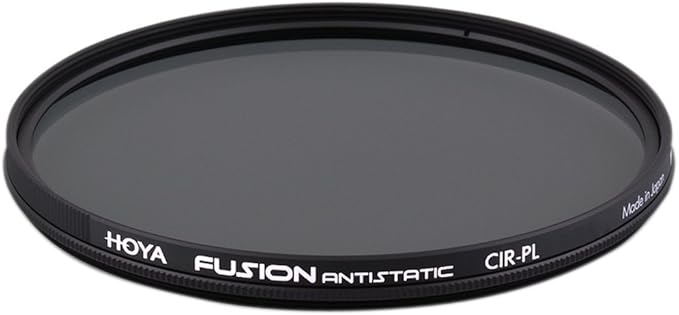
Hoya YSCPL067 67mm Fusion Antistatic CIR-PL Filter
Cut glare on water, glass, and wet pavement while keeping your lens dust-free all day — the Fusion Antistatic CIR-PL's coatings work as hard as the polarizer itself.
Check availability
Affiliate Disclosure: As an Amazon Associate, Studio Supplies earns from qualifying purchases made through links on this page, at no additional cost to you. This helps support our editorial team.
Notice a mistake? Let Us Know
Overview
Key Features
NEW Antistatic coating repels dust
Scratch resistant - Hardened coating protects against everyday wear
Stain resistant - Protects against exposure to ink, markers etc.
Water repellent - Water beads up and wipes away easily
Fingerprints and smudges wipe away cleanly
Specifications
Brand
Hoya
Model
YSCPL067
Filter Size
67mm
Filter Type
Circular Polarizing (CIR-PL)
Coating
Antistatic, Scratch Resistant, Stain Resistant, Water Repellent, Fingerprint Resistant
Coating Layers
9-layer Super Multi-coating
Frequently Asked Questions
What does the antistatic coating actually do in the field, and is it noticeable?
The antistatic coating dissipates the electrostatic charge that glass surfaces naturally accumulate, which is the charge that attracts and holds airborne dust particles. On a shoot near sand, dry grass, or in dusty urban environments, you'll notice the Fusion stays cleaner between cleans compared to a standard polarizer. Less time cleaning means more time shooting.
How does the 9-layer Super Multi-coating affect image quality compared to a single-coated polarizer?
Multi-coating reduces internal reflections between the filter's glass layers, which translates to better contrast retention and reduced flare and ghosting when shooting toward bright light sources. A single-coated polarizer introduces more light scatter inside the filter stack; the Fusion's 9-layer treatment keeps contrast and color saturation where the polarizer's effect delivers them rather than giving them back in flare.
Does this filter affect autofocus performance on native 67mm lenses?
No. Circular polarizing filters (CIR-PL) are specifically designed for cameras with phase-detection and contrast-detection AF systems. The circular polarization maintains the light phase structure that autofocus sensors require — a linear polarizer would interfere with AF. The Fusion CIR-PL is safe for all modern autofocus systems.
How durable is the scratch-resistant coating under regular cleaning?
Hoya's hardened coating is designed for repeated field cleaning with microfiber cloth. The scratch-resistant layer, combined with the water-repellent and stain-resistant coatings, means most contaminants wipe away cleanly with minimal friction — reducing the abrasion risk that comes with cleaning a heavily contaminated surface. Standard microfiber and lens cleaning fluid practice applies.
Will the Fusion CIR-PL cause vignetting on full-frame wide-angle lenses at 67mm?
At 67mm thread diameter, vignetting risk depends on your specific lens — wide-angle lenses with large front elements are the primary concern. The Fusion's frame profile should be checked against your widest focal length. For most 67mm lenses used at 24mm or longer on full-frame, vignetting is not an issue.
Related Products


