

Korg
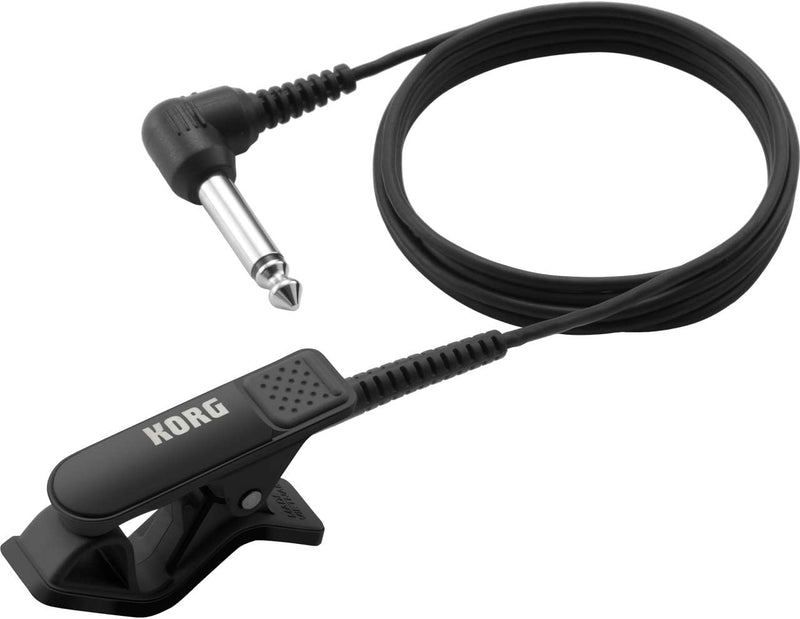
Korg CM-300 Clip-On Contact Microphone, Black
★★★★★
Amplify Your Sound with Precision The Korg CM-200 Contact Microphone allows you to capture the pure sound of your instrument directly. Designed for tuners, this piezo clip-on microphone is suitable for a variety of instruments. Maximum Clip Width: 30 mm Cable Length: 1.5 m Type: Clip-On Contac...
$21.05*
Check availability
*Price sourced from Amazon.com. Last updated:Jun 04, 2026.Price and availability are subject to change.
Affiliate Disclosure: Studio Supplies may earn a commission from qualifying purchases made through links on this page, at no additional cost to you. This helps support our editorial team.
Notice a mistake? Let Us Know
Overview
Amplify Your Sound with Precision
The Korg CM-200 Contact Microphone allows you to capture the pure sound of your instrument directly. Designed for tuners, this piezo clip-on microphone is suitable for a variety of instruments.
- Maximum Clip Width: 30 mm
- Cable Length: 1.5 m
- Type: Clip-On Contact Microphone for Tuners
- Item Dimensions: 5 x 1 x 3 inches (L x W x H)
- Power Source: Corded Electric
- Batteries: 1 Lithium Ion battery required
- Material: Brass
- Number of Channels: 1
- Manufacturer: Korg USA Inc.
- Item Weight: 2.11 ounces (0.06 Kilograms)
- Color: Black
- Model Name: CM200BK
- Connectivity Technology: Auxiliary
- Connector Type: XLR
- Special Feature: Clip
- Polar Pattern: Unidirectional
- Included Components: microphone
Key Features
Maximum width of clip: 30 mm
Cable: 1.5 m
Clip On Contact Microphone for Tuners
Specifications
Product Type
Clip-On Contact Microphone
Maximum Clip Width
30 mm
Cable Length
1.5 m
Color
Black
Intended Use
For Tuners
Pros & Cons
👍 Pros
- Designed as a clip-on contact microphone, offering convenience and direct signal capture from instruments.
- Specifically intended for use with tuners, ensuring accurate pitch detection by directly sensing vibrations.
- Features a maximum clip width of 30mm, allowing it to attach to a variety of instruments securely.
- Equipped with a 1.5m cable, providing ample length for comfortable placement and movement during tuning.
- The black color offers a discreet and professional appearance when attached to instruments.
- Directly picks up vibrations, which can be more effective in noisy environments than air-borne microphones.
- Its contact microphone design helps to isolate the sound of the instrument from ambient noise, improving tuning accuracy.
- The Korg brand is well-known in the music industry for tuning devices, suggesting reliability and compatibility.
- Portable and easy to use, making it suitable for musicians on the go or in various practice settings.
👎 Cons
- Specifically designed for tuners, its audio quality or frequency response may not be optimized for recording or amplification.
- The maximum clip width of 30mm means it may not fit on all instruments, particularly those with thicker bodies or soundboards.
- A 1.5m cable, while offering some length, might be limiting for certain setups or larger instruments.
- The contact microphone design, while good for isolation, might not capture the natural acoustic resonance or "air" of an instrument as fully as a traditional microphone.
- The features do not specify any material details of the clip, leaving open questions about its long-term durability or grip strength.
Frequently Asked Questions
What is the primary purpose of the Korg CM-300 Clip-On Contact Microphone?
The Korg CM-300 is primarily designed as a clip-on contact microphone specifically for use with tuners, to accurately detect instrument vibrations.
What is the maximum width the clip can open to?
The clip has a maximum width of 30 mm, allowing it to securely attach to various instruments.
How long is the cable on the Korg CM-300?
The microphone comes with a 1.5-meter cable, providing sufficient length for connecting to your tuner.
What color is this contact microphone?
The Korg CM-300 Clip-On Contact Microphone is black.
Can this microphone be used for recording instruments?
While it picks up vibrations, it is specifically designed for tuners, so its audio characteristics may not be optimized for high-fidelity recording purposes.
Is this microphone suitable for use in noisy environments?
Yes, its contact microphone design helps isolate the instrument's sound by picking up direct vibrations, which can be advantageous in noisy surroundings compared to air-based microphones.
Related Products


