



Kramer
Kramer 10151232 SL-1N Master Room Controller
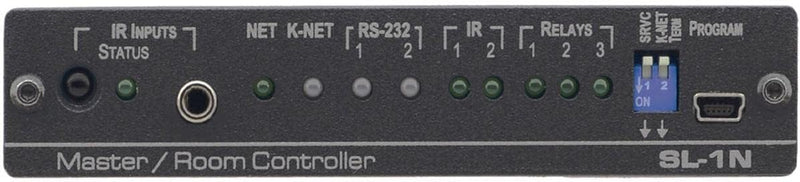
The Kramer SL-1N puts full LAN-based room control — RS-232, IR, relay, and K-NET — into a palm-sized controller that configures without writing a line of code.
$276.00*
Check availability
*Price sourced from Amazon.com. Last updated:Aug 28, 2026.Price and availability are subject to change — details.
Affiliate Disclosure: As an Amazon Associate, Studio Supplies earns from qualifying purchases made through links on this page, at no additional cost to you. This helps support our editorial team.
Notice a mistake? Let Us Know
Overview
Specifications
Brand
Kramer
Model
SL-1N (10151232)
Ethernet Ports
1
K-NET Connectors
1
RS-232 Ports
2 (Bidirectional)
IR Emitter Ports
2
Relay Control Ports
3
Max IP Control Clients
15 Simultaneous
Firmware Update Port
Mini USB
Configuration Software
Kramer K-Config
Remote Management
Kramer Site-CTRL
Dimensions
2.81 x 4.72 x 0.96 inches
Weight
7 ounces
Frequently Asked Questions
What types of devices can the SL-1N actually control, and how?
The SL-1N controls devices through four distinct signal paths: two bidirectional RS-232 ports for serial-controlled equipment (displays, switchers, matrix routers), two IR emitter ports for consumer AV gear, three relay ports for contact-closure devices like motorized screens and blackout shades, and one Ethernet port for IP-controllable devices and gateways. A single unit covers the full signal mix typical of a corporate or boardroom AV installation.
How many simultaneous IP control clients can connect to the SL-1N?
It supports up to 15 simultaneous IP control clients. In practice, this means 15 separate software clients, control panels, or third-party systems can query or command the SL-1N at the same time over the network without connection queuing.
What software is required to program the SL-1N?
Configuration is done through Kramer's K-Config software, which uses a graphical interface to map control logic without requiring custom scripting. Remote management after deployment is handled through Kramer Site-CTRL over IP, which allows firmware updates and configuration changes without physical access to the unit.
How does K-NET expand the system beyond a single SL-1N?
The K-NET connector allows the SL-1N to communicate with auxiliary Kramer room controllers, effectively extending the control surface to secondary rooms or additional control points without adding another IP device to the network. It's a proprietary bus, so expansion is limited to compatible Kramer K-NET hardware.
Can the SL-1N learn IR commands from existing remotes?
Yes. It has an onboard IR sensor and dedicated IR input port for capturing commands from existing IR remotes. This allows you to clone control of equipment without sourcing manufacturer IR code libraries — useful for legacy gear with limited documentation.
Related Products


