

Kramer Electronics
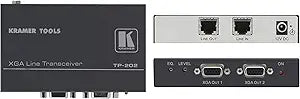
Kramer Electronics TP-202 Video Processor
Kramer TP-202 distributes composite video and audio over twisted pair cabling for flexible AV installations.
View price on Amazon
Affiliate Disclosure: As an Amazon Associate, Studio Supplies earns from qualifying purchases made through links on this page, at no additional cost to you. This helps support our editorial team.
Notice a mistake? Let Us Know
Overview
[Missing Description] Kramer Electronics TP-202
Unfortunately, there is no description listed for this product.
Frequently Asked Questions
What does the Kramer TP-202 do?
The TP-202 is a distribution amplifier that sends composite video and unbalanced stereo audio signals over twisted pair (CAT5-type) cabling to two outputs, simplifying long cable runs in AV installations.
What type of cabling does the TP-202 use?
It transmits signals over standard twisted pair cabling (such as CAT5), which is less expensive and easier to route than traditional coaxial or RCA runs over long distances.
How many outputs does the TP-202 support?
The TP-202 provides two twisted pair outputs, allowing you to distribute the same source signal to two remote display or receiver locations.
Is the TP-202 compatible with Kramer twisted pair receivers?
Yes, it is designed to work with Kramer's line of twisted pair receivers, which convert the signal back to standard composite video and audio at the destination end.
Related Products


