



Kupo
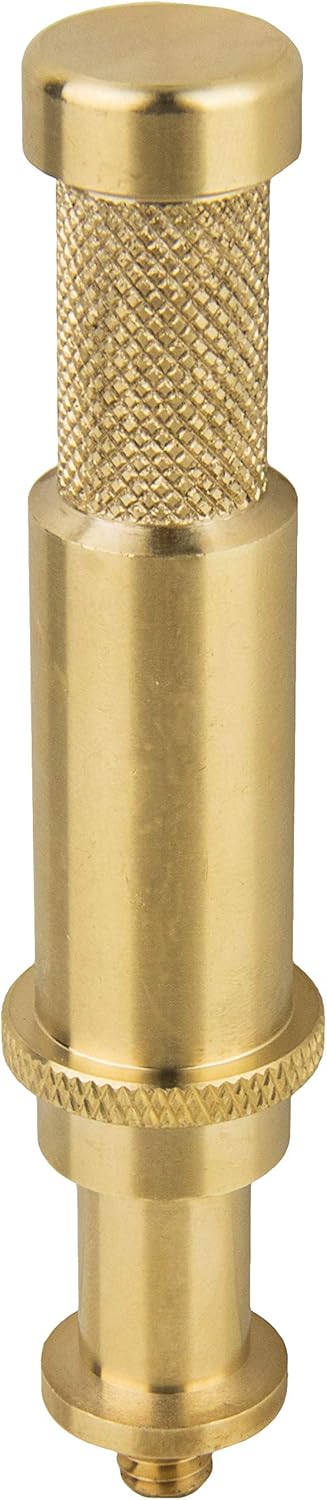
Kupo KG090912 Double-Ended Spigot
Bridge any 5/8" baby pin receiver to a 1/4"-20 threaded accessory with this solid brass double-ended spigot built for the demands of professional production rigging.
$13.95*
Check availability
*Price sourced from Amazon.com. Last updated:Oct 07, 2026.Price and availability are subject to change — details.
Affiliate Disclosure: As an Amazon Associate, Studio Supplies earns from qualifying purchases made through links on this page, at no additional cost to you. This helps support our editorial team.
Notice a mistake? Let Us Know
Overview
Key Features
SPECIFICATIONS: Solid brass double-ended spigot featuring a 5/8" baby pin on one end and a 1/4"-20 threaded stud on the other with knurled neck for secure mounting.
DUAL INTERFACE DESIGN: Connects equipment with 5/8" receivers to cameras or accessories with 1/4"-20 threads.
SECURE BABY PIN FIT: 5/8" baby pin seats firmly in clamps and receivers for stable mounting.
KNURLED GRIP SURFACE: Knurled neck improves friction for secure tightening and adjustment.
DURABLE BRASS CONSTRUCTION: Solid brass build ensures strength, durability, and long service life in professional use.
Specifications
Material
Solid brass
End 1
5/8" (16mm) baby pin
End 2
1/4"-20 threaded stud
Grip Feature
Knurled neck for hand-tightening
Compatibility (5/8" end)
Super Convi Clamps and any standard 5/8" receiver
Compatibility (1/4"-20 end)
Cameras and accessories with 1/4"-20 thread
Frequently Asked Questions
What is the specific thread configuration of the KG090912?
One end is a 5/8" (16mm) baby pin — the industry-standard stud that seats in Super Convi Clamps, grip heads, and any standard 5/8" receiver. The opposite end is a 1/4"-20 threaded stud, which is the standard camera and accessory thread used across the industry for mounting monitors, lights, and accessories.
Why brass instead of aluminum or steel for a spigot like this?
Solid brass offers the right balance of hardness and machinability for threaded mounting hardware. It resists thread galling (where threads seize and strip under load) better than aluminum, is lighter than steel, and resists corrosion without surface treatment. For hardware that is inserted, tightened, and removed repeatedly across productions, brass thread integrity outlasts aluminum alternatives.
Will the 1/4"-20 end hold a small LED fixture or monitor securely?
The 1/4"-20 stud is rated for standard camera accessory loads. For lightweight accessories — small on-camera monitors, mini LED panels, microphone holders — the connection is secure when properly tightened. The knurled neck provides additional grip surface for manual tightening without tools, which speeds up rigging on set.
Is the knurled neck on this spigot functional or decorative?
Functional. The knurled grip section allows you to hand-tighten and fine-adjust the spigot in a clamp or receiver with meaningful torque, improving clamping friction and reducing the chance of the spigot rotating under load during a shoot.
Can this spigot be used to mount lighting accessories into a grip clamp?
Yes — that is a primary use case. The 5/8" baby pin seats into any standard grip clamp or receiver, and the 1/4"-20 end accepts accessories that lack a baby pin attachment point, effectively bridging the two mounting systems. This is exactly the interface problem this spigot is designed to solve on set.
Related Products


