



Latin Percussion
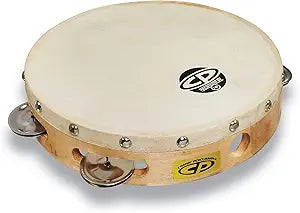
Latin Percussion CP378 8" Wood Tambourine Single Row Jingles
An 8-inch wood-shell tambourine with calfskin head and steel jingles that delivers a focused, natural shimmer without overwhelming the upper midrange of a live or studio mix.
$14.99*
View on Amazon
✓ In Stock on Amazon.com
*Price sourced from Amazon.com. Last updated:Oct 24, 2026.Price and availability are subject to change — details.
Affiliate Disclosure: As an Amazon Associate, Studio Supplies earns from qualifying purchases made through links on this page, at no additional cost to you. This helps support our editorial team.
Notice a mistake? Let Us Know
Overview
Key Features
8" Solid wood shell with a calfskin head
Single row of steel jingles produce a relatively softer, crisp tone
Lightweight for playing comfort
Country of origin is Pakistan
Specifications
Diameter
8 inches
Shell Material
Solid Wood
Head Material
Calfskin
Jingle Configuration
Single Row
Jingle Material
Steel
Country of Origin
Pakistan
Model
CP378
Frequently Asked Questions
How does the calfskin head affect the sound compared to a synthetic Mylar head?
Calfskin responds to playing pressure with noticeably more body and warmth than Mylar. It absorbs some of the steel jingle brightness at the attack, rounding the transient slightly and producing a tone that sits more naturally in an acoustic or folk mix. The trade-off is sensitivity to ambient humidity — calfskin will tighten in dry conditions and go slack in high-humidity environments, changing the pitch and resonance of the head slap.
Does the single row of jingles limit this tambourine to quieter musical contexts?
The single jingle row produces a relatively controlled output level, yes — it won't project over a loud rock band without close miking. In studio tracking, that controlled shimmer is often an advantage: it sits in the upper register without competing with hi-hat or overhead cymbal content. For live acoustic sets, folk, singer-songwriter, or worship music at moderate volumes, the single-row output is appropriate without reinforcement.
How does the 8-inch diameter affect playing technique compared to a 10-inch model?
The smaller diameter reduces both weight and rotational inertia, making it more responsive to wrist-driven playing styles — the kind used in hand-held Latin and pop applications. A 10-inch frame allows more surface area for thumb rolls and is easier to strike with a mallet, but the 8-inch CP378 is oriented toward held, shaken, or struck playing where compact control matters more than maximum resonating surface.
Is this instrument suitable for close-miking in a recording session?
Yes, though placement matters. The steel jingles are the primary sound source — position the microphone angled toward the jingle row at 6–12 inches to capture shimmer without excessive hand or shell noise. A small-diaphragm condenser with a gentle high-pass around 200Hz will capture the jingle detail cleanly. The calfskin head slap adds articulation at the transient and can be featured or reduced by moving the mic axis toward or away from the head.
Does the wood shell contribute to the sound, or is it purely structural?
The shell contributes a subtle but audible warmth to the overall resonance — wood absorbs and releases energy differently than plastic, adding a slight natural decay to the jingle sustain. It won't be detectable in a dense arrangement, but in solo or sparse acoustic recording the organic character of the wood shell is part of what separates this from a plastic-framed budget instrument.
Related Products


